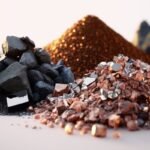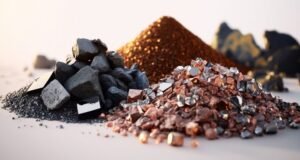
The United States and other countries have been scrounging for ways to reduce reliance on critical minerals and rare earths as excavated and especially as processed by the People’s Republic of China. But is it true that China has “Overplayed Its Hand on Critical Minerals,” as Scott Morrison, a former Australian prime minister, argues (Wall Street Journal, September 8, 2026)?
When a government exploits a chokepoint, whether Iran holding the Strait of Hormuz or China bringing down the boom on rare earths, it takes a risk. In the short term, Iran or China will achieve asymmetric gains, but over time these returns will diminish. Inventories rise, customers diversify, producers change investment plans, and infrastructure that had been too expensive becomes economical. That’s happening now with China’s hold on critical minerals, and it’s why Beijing’s trading partners are working together more effectively to break that hold…..
China’s advantage wasn’t geology or even technology. It was economics. As I told Congress last year, China routinely kept other suppliers out of the market by increasing the supply, depressing the price, tanking the market and absorbing the loss, making any new venture uneconomical….
The West wasn’t helping itself at the time. Western end users happily took the cheaper deal from China, reinforcing the concentration that became their own vulnerability.
China’s decision to activate its leverage changed all this. Over 18 months starting in July 2023, Beijing imposed export controls on gallium, germanium, graphite, antimony and some rare-earth-related manufacturing.
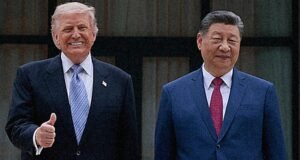
After Mr. Trump returned to office, China imposed further export controls on tungsten, tellurium, bismuth, molybdenum, indium and seven medium and heavy rare earths, including dysprosium and terbium. Shortly before the late October 2025 Xi-Trump meeting in Busan, South Korea, China jumped the shark, asserting licensing control over any product made anywhere in the world containing Chinese rare earths.
In November, China’s easing of export restrictions on critical minerals, part of a 12-month economic truce negotiated in Busan, is set to expire. The agreement may be renewed, perhaps as a result of dealmaking between Trump and Xi if and when the latter comes to Washington later this month.
Price manipulation
Whether or not the truce or quasi-truce is extended, Morrison sees hope in the measures that the U.S. has taken to promote mineral development and inoculate U.S. producers “against China’s price manipulation, ensuring their ventures remained commercially viable for investors.”
These and further steps by the U.S. and other country governments will take time to bear fruit. In the United States, they often require the cooperation of parts of the federal and other governments that an administration does not directly control. As Morrison puts it, it is now essential “to put permitting and the bureaucracy on a conflict footing” (an almost-war footing?).
Mostly this means that the bureaucrats must agree to get out of the way. A tall order. But we have a better chance now that we are tackling the problem, a fact for which we “counterintuitively…have China to thank.”
Also see:
Select Committee on the CCP: “Predatory Pricing: How the Chinese Communist Party Manipulates Global Mineral Prices to Maintain Its Dominance”
StoptheCCP: “The Mad, Mad, Mad, Mad World of Rare Earths”
“Somehow these elements are essential but not so much that one would want to bend environmental rules to produce them….
“The market’s demands will change over time. One can do as Aptiv and BorgWarner are doing now and learn to do without, or one can bet heavily on status quo technology that that will be obsolete by the time a U.S. rare earths supply chain is built.”