Countries like China and Russia may be nervous that two of the top fellow gangster countries, Venezuela and Iran, have apparently been taken off the board.
Of course, things are in flux in both countries. The attack on Iran is still in progress. The quagmire has already lasted several days and the U.S. and Israel are still at work. Who knows how long it will take to finish the job and effectively turn the country over to a new government. The first ten minutes of Operation Epic Fury were auspicious, however. And 90 percent of the work of this operation was about getting to the point at which it could be commenced, a 47-year process.
Anyway, things are not looking great for China or for Xi Jinping, who has also been plagued by domestic political problems.
“Catastrophic”
Zineb Riboua says that “Operation Epic Fury Is Catastrophic for Xi” (National Review, March 4, 2026).
Three reasons. “First, the Iranian counterweight is gone…. Beijing needed a defiant Tehran to keep Washington pinned down in the Gulf, to sustain a sanctions-proof energy corridor, and above all, to stand as living evidence that American power had hard limits.”
Second, “Second, Xi’s own story is collapsing from the inside. The story he told 1.4 billion people—that America is a declining power incapable of decisive force projection—does not match what happened in mere hours over Tehran.”
Even if the CCP’s censorship can hide what is going on from most ordinary Chinese, a dubious proposition, “the ones who matter most—the military planners, the foreign policy professionals, the provincial officials who read between the lines for a living—know what they saw. And if the story is wrong about Iran, the unavoidable next question is whether it was ever right about anything else.”
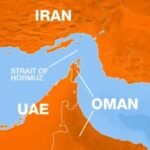
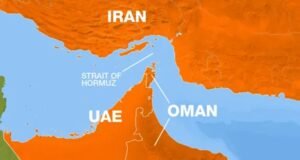
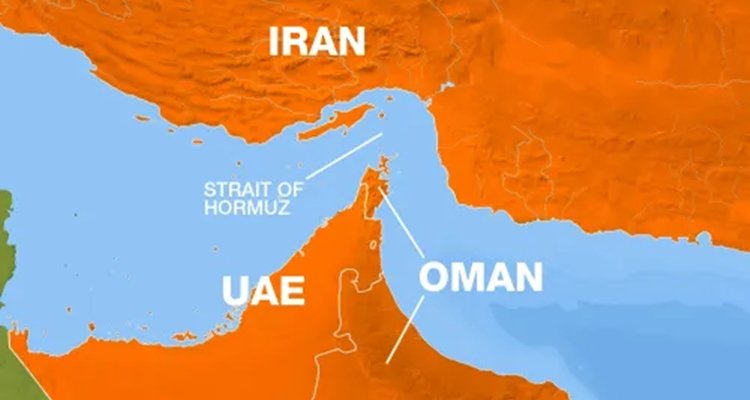
Third, problems getting oil. “Half of China’s total oil imports pass through the Strait of Hormuz. With Khamenei now dead and Iran’s military leadership weakened, the Gulf’s strategic balance shifts decisively toward Saudi Arabia and the United Arab Emirates, whose energy ties with the United States are strengthening.”
At present, Beijing is disoriented, the clearest sign of which is “absence of action: no emergency summits, no diplomatic maneuvers, no military repositioning, even as a Chinese citizen was killed in cross fire in Tehran and over 3,000 nationals were evacuated. The sum total of Beijing’s response to the largest American military operation in a generation remains a press conference. Xi bet a decade of foreign policy on Khamenei’s ability to survive American pressure, and the bet did not pay off.”
Reuters explains that not just oil delivery but other “vibrant” if indeterminate economic deals between China and Iran have been disrupted by Operation Epic Fury. “Chinese government procurement and tender records on Iran show contracts issued in recent months, pointing to the vibrant commercial engagement of the two nations, though the total size of China’s investment in the projects was not immediately clear….
“Beijing has long backed US-sanctioned Tehran in efforts to deepen its strategic and economic heft in the Middle East, signing a 25-year cooperation deal in 2021, though full details were never disclosed.”
A call for peace
China can’t or won’t help Iran militarily, but it is willing to call for an end to hostilities and a return to failed diplomacy.
The CCP reported that during a call with a Saudi diplomat, Chinese Foreign Minister Wang Yi said that the People’s Republic of China would be sending “a special envoy on Middle East issues to regional countries for mediation.”
After all, said Wang, Beijing “has always been a force for peace and is willing to continue playing a constructive role.” All parties should “return to dialogue and negotiations as soon as possible, and prevent the further escalation of tensions.”
Now that China has come out against escalation of tensions, can we expect that it will never again do anything to escalate tensions?
Also see:
The White House: “The Iranian Regime’s Decades of Terrorism Against American Citizens”