Things have been going badly in Hong Kong under the intensified repression of the last five years. And they aren’t going too well, either, in Macau, another former Western colony handed over to the Chinese communists, (“Macau’s first ‘patriots’ election sees low turnout,” The Business Times, September 15, 2025).
Britannica says that under the Basic Law of the Macau Special Administrative Region that went into effect after the People’s Republic of China took over from Portugal in 1999, incarnating “one country, two systems” as the meaningless catch phrase goes, Macau will for fifty years “retain its capitalist economy and some political autonomy….”
Example of the latter: only CCP-approved candidates may stand for election in the way things are now in Macau, which is also the way things are now in Hong Kong.
Macau’s first “patriots only” legislative polls on Sunday saw one of the worst turnout rates in recent years, preliminary results showed, after authorities disqualified a dozen candidates and arrested a former opposition lawmaker.
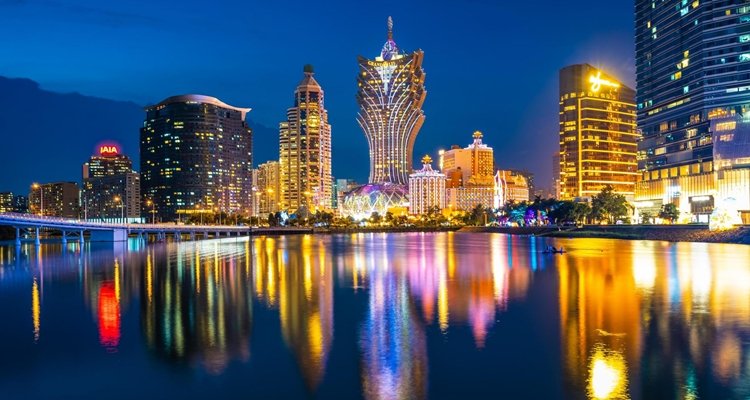
The Chinese casino hub—with a population just shy of 700,000—amended its election laws in 2024, giving national security officials the final say on candidates’ eligibility….
Election chiefs told a press conference they had no comment when asked about the record number of blank and invalid ballots cast— 5,987 and 7,077 respectively.
The elections strictly adhered to the fundamental principle of “patriots governing Macau”, city leader Sam Hou-fai said in a Monday statement….
A 38-year-old clerk who declined to give his name said he did not register to vote.
“Even if I had a voter card, I wouldn’t particularly want to vote. There’s no real politics in Macau anymore,” he told AFP.
A professor at University of Macau, Eilo Yu, considering the state of affairs, says both that Beijing’s disqualifications of candidates represent its attempt “to suppress dissenting voices within the legislature” and also that Macau voters “currently retain some choice” in elections. They do not, not really, if they are not allowed to consider any fundamental alternatives to the CCP-selected candidates. Yu also says that he expects the legislature to become a rubber-stamp body now. So he disagrees with himself.
The whole guarantee of freedom and some political autonomy for fifty years thing has proved unreliable.
Britannica reports: “In April 1987 Portugal and China reached an agreement to return Macau to Chinese rule in 1999, using the Hong Kong Joint Declaration between Britain and China as a model. They agreed to provisions under the Basic Law that would ensure [sic] the autonomy of Macau for 50 years after the start of Chinese rule. These included Macau’s right to elect local leaders, the right of its residents to travel freely, and the right to maintain its way of life, both economically and socially.”
Whether the expectation of how Macau’s first fifty years under Chinese rule will go is reasonable with respect to political institutions perhaps depends on the meaning of “some.” But if you can’t have meaningful elections, this sounds more like “no political autonomy” than “some political autonomy.” Time for Britannica to update its article.