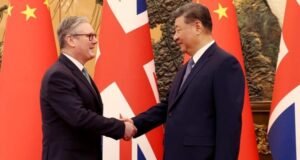
Details are not entirely clear and commitments still await finalization and action, but the U.S. president and top negotiators have affirmed that the United States and China have signed a trade deal affirming details of previous trade deals, as well as new details (“Trump announces trade deal signed with China,” The Post Millennial, June 26, 2025).
President Donald Trump said on Thursday that the US signed a trade deal with China and that a deal with India may also be in the works.
He said that Trump administration officials have been “working overtime making deals with other countries,” and then added, “We just signed with China yesterday, right? Just signed with China.” However, he did not specify the details of the deal.
Trump then added, “We have one coming up maybe with India.” The comments were made while he was speaking at an event surrounding his and the GOP’s push for the “One Big Beautiful Bill” to pass through Congress.
“We’re going to open up India. In the China deal, we’re starting to open up China. Things that never really could have happened. And the relationship with every country has been very good,” Trump added.
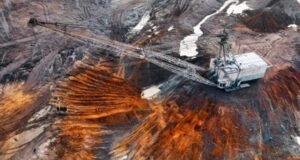
Terms of trade with China have been codified and the China-controlled rare earths essential to making cars and military equipment that China has been withholding from the United States are on the way. Not right now but soon.
“They’re going to deliver rare earths to us,” after which “we’ll take down our countermeasures,” says U.S. Secretary of Commerce Howard Lutnick.
The China agreement sets out the terms laid out in trade talks between Beijing and Washington in 2025—a milestone after both sides accused each other of violating the terms of previous handshake accords. Yet it still hinges on future actions by both nations, including China’s export of rare earth materials.”
Mr Lutnick said on June 26 that under the agreement inked two days earlier, US “countermeasures” imposed ahead of the London talks would be lifted—but only once rare earth materials start flowing from China. Those US measures include export curbs on materials, such as ethane used to make plastic, chip software and jet engines.
The agreement comes as the US moves to ease restrictions on exports of ethane, with the Commerce Department earlier this week telling energy companies they could load that petroleum gas onto tankers and ship it to China—but not unload it there without authorisation.
Bloomberg previously reported that American firms reliant on those Chinese minerals are still waiting on Beijing’s approval for shipments.
Framework to implement
A White House official says: “The administration and China agreed to an additional understanding for a framework to implement the Geneva agreement” of last month so that “we can implement expediting rare earths shipments to the US again.”
Early in June, China issued temporary export licenses for suppliers of rare earths to three major U.S. automakers.
The Guardian notes that China has “a virtual monopoly on the global supply of rare earths, having grown to dominate production and processing in the 1990s and the 2000s. Some of the rare earths mined in China are used in US military equipment, a vulnerability that has been laid bare in the US-China trade war….
“China has been taking its dual-use restrictions on rare earths ‘very seriously’ and has been vetting buyers to ensure that materials are not diverted to US military uses, according to an industry source. This has slowed down the licensing process.”
The Wall Street Journal reports that China has also been holding the passports of some of its experts on rare earths so that they can’t travel overseas and give tips on processing rare earths to other countries.
Also see:
The Wall Street Journal: “China Is Tracking Down Its Rare-Earth Experts—and Taking Away Passports” (June 25, 2025)
National Defense Magazine: “U.S. Begins Forging Rare Earth Supply Chain“ (February 10, 2023)
The Conversation: “How the US can mine its own critical minerals−without digging new holes“ (May 6, 2025)