Certain Kuomintang elders want currency reform. For starters.
The reform would consist of uniting the currencies of the People’s Republic of China and the Republic of China. This in itself, regardless of any economic or trade benefits claimed for the change, would give Beijing enormous new power over the Taiwanese, putting them more and more at the mercy of the mainland’s bad economic policies.
But the proposed unification of currencies would also help the PRC to absorb Taiwan altogether (Taipei Times, November 22, 2026).
A group of senior figures from the Chinese Nationalist Party (KMT) recently held a seminar commemorating Republic of China founder Sun Yat-sen on his birthday. At the event, former Straits Exchange Foundation chairman Chiu Chin-yi, 89, proposed a “10-year plan” for cross-strait unification: the KMT regaining power in 2028, achieving cross-strait currency unification by 2032 and discussing “one country, two systems” by 2036….
Adopting a common currency can eliminate exchange rate fluctuations and risks between nations, significantly reduce transaction costs and deepen overall economic integration. However, that comes at the cost of losing independent monetary policy, making it impossible to adjust competitiveness through currency depreciation and even potentially transferring or amplifying systemic financial risks. If the countries’ economic cycles are out of sync, and labor and resources cannot move freely, then adjustments might become more difficult.
Today, the New Taiwan dollar remains stable in Asia. It is supported by robust exports, semiconductor and high-tech industries’ supply chains and long-term steady current account surpluses. While the NT dollar is freely convertible, the daily fluctuations of the Chinese yuan and capital flows are controlled by the People’s Bank of China. Moreover, the NT dollar typically performs stronger than the yuan, and their responses and policy interventions to the fluctuations in the US dollar are different.
The elders say that their ultimate goal is “one country, two systems.” Among the relevant historical examples of CCP’s allegedly tolerant approach toward captured polities is the PRC’s treatment of Hong Kong, whose second system Beijing started to wipe out as soon as Britain relinquished governance of the colony in 1997; the process sharply accelerated after 2019. After any comparable “peaceful” unification of the mainland and Taiwan, erasure of the ROC government would happen much faster, regardless of any uttered guarantees about preserving that second system.
Author Lee Hsiao-feng accuses supporters of Chiu’s ten-year plan of lacking common sense. Also of giving short shrift to “the values of democracy, freedom and human rights, as their ten-year plan makes no mention of those.”
Also see:
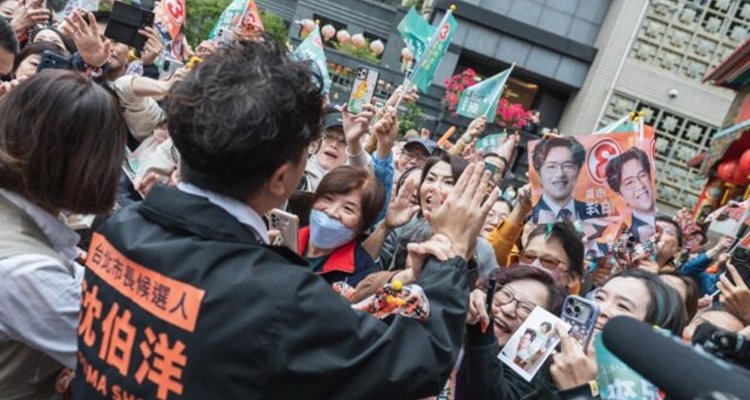
The Diplomat: Taiwan’s Local Elections: The Races to Watch (November 21, 2026)
“Your guide to the most competitive races—and the ones that could impact the 2028 presidential election.” These elections are being held on November 28.