It’s about algorithms—still ByteDance’s algorithms—and what happens to the users’ data.
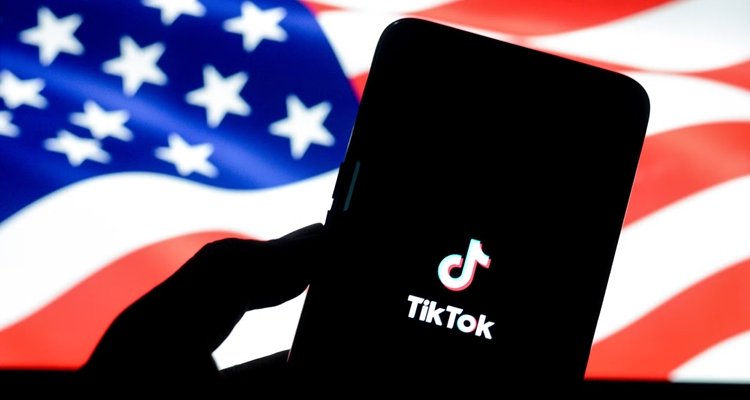
The last few years have supposedly been about successfully wresting control of the version of TikTok used by Americans from ByteDance and thus from the Chinese Communist Party. Did the United States accomplish this when Beijing-based ByteDance sort of sold the TikTok U.S. to a partly American investment group in January 2026?
A group consisting of Oracle, Silver Lake, MGX (a United Arab Emirates investment fund) and various other American and foreign investors owns 80.1% of TikTok U.S. and has majority control of TikTok U.S. in some meaningful sense. But ByteDance still owns 19.9% of the U.S. operation.
So the congressionally required full divestiture, the only alternative to which was supposed to be a ban on TikTok in the United States, didn’t happen. Also, the U.S. version of TikTok is still using ByteDance’s algorithms.
And it is ByteDance that runs TikTok Shop, which launched in the U.S. in September 2023 and is still accessible through the TikTok U.S. app. The U.S. infrastructure handles sales and fulfillment, as well as product recommendations. But ByteDance controls much advertising and the recommendation technology.
So it’s not as if ByteDance, which answers to the Chinese Communist Party, is now out of the picture. And the ways that it continues to be involved in the U.S. version of TikTok do not necessarily exhaust all the ways that ByteDance is or could be involved.
The Select Committee’s request
Because of such considerations, Congressman John Moolenaar, chairman of the House Select Committee on the Chinese Communist Party, has wanted officials of the American TikTok company to testify about how the government of the People’s Republic of China may be influencing its app. TikTok US had apparently agreed to do so but has now reneged, as Moolenaar reports (September 3, 2026).
“TikTok has backed out of its commitment to appear at the Committee’s September roundtable to answer questions on China’s influence over TikTok’s algorithm and its access to Americans’ data.
“Over the last five months, the Committee has negotiated in good faith with TikTok, and the company agreed to have its chief security officer appear at a bipartisan Committee roundtable in September. Now TikTok is refusing to appear, citing its own desire to avoid broader scrutiny of its child safety practices. We will continue to work in good faith to protect the American people and ensure TikTok executives publicly address the Committee’s questions regarding its operations and safeguards—consistent with the requirements of the Protecting Americans From Foreign Adversary Controlled Applications Act—before the end of the year.”
Moolenaar told Bloomberg that TikTok U.S. had “claimed that in light of Meta’s settlement with state attorneys general, they wouldn’t be able to answer questions on child-safety issues,” using this supposed legal impediment as a reason to back out even though the roundtable would have been focused on national security risks.
Also see:
The Verge: “Congress doesn’t seem to know if the TikTok deal complies with its law” (January 23, 2026)
“TikTok finally closed a deal meant to bring it into compliance with the law that should have banned it a year ago, and the lawmakers who passed that law still don’t seem to know what’s going on….
“The sparse details in the press release shed little light on outstanding questions from the time that the deal was first announced, such as whether a licensing agreement for the algorithm can be crafted in a way that avoids the sort of relationship with ByteDance that would be prohibited by the law. Even lawmakers who supported the bill seem to be in the dark.”
Harvard Law Today: “Is the new US TikTok safer?” An interview with Harvard Law lecturer Timothy Edgar (February 27, 2026)
Foreign adversaries can still “gain access through hacking or insider threats. If they have an insider they’ve subverted, they can gain access by buying the information either openly through advertising networks or clandestinely through the dark web. None of those risks have changed by changing the ownership structure of TikTok. You have the same risks of the data that TikTok is still collecting on Americans. You have the same risks of espionage by Chinese or other adversary hackers….
“The privacy and security safeguards that were being applied to TikTok prior to the sale now don’t apply anymore, so those risks actually go up.”