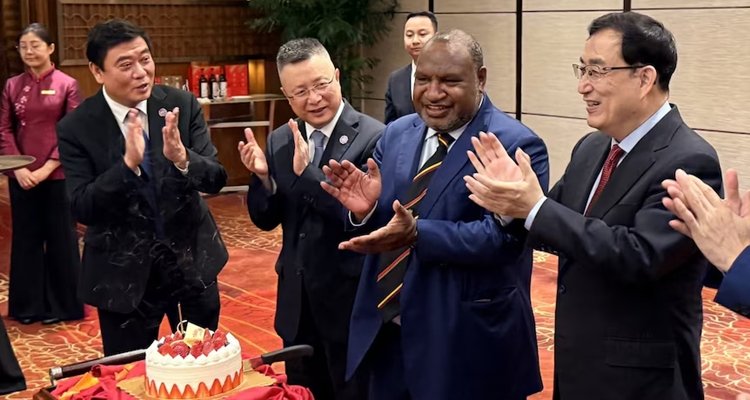
The foreign minister of Papua New Guinea sounds tough and noble about it. Much unwavering commitment, honoring, respecting, and upholding of foundational bedrock are trumpeted.
On July 15, 2026, a PNG Ministry of Foreign Affairs press release announced “the immediate cessation of operations and the formal closure of the physical presence of the Chinese Taipei Economic Office (Taiwan) in the country.”
Perhaps the office’s mental presence will be allowed to continue.
“Minister Tkatchenko emphasized that this administrative action underscores the Marape-Rosso Government’s unwavering commitment to honoring, respecting, and upholding Papua New Guinea’s foundational One-China Policy, which has served as the bedrock of the nation’s foreign policy framework for over 50 years since the establishment of bilateral relations.”
Thirty-seven years
Well, it’s very confusing. If appeasing the People’s Republic of China and abiding by all mandates of its One China Policy has served as the bedrock of PNG’s foreign policy framework for over fifty years, why is Papua New Guinea only now, by this “decisive action,” or craven action, whatever it is, getting rid of the physical presence of the Chinese Taipei Economic Office (Taiwan)?
Taipei and Port Moresby have not had formal diplomatic ties. Few country governments are willing to buck Beijing and diplomatically recognize the Republic of China. But Papua New Guinea signed a trade agreement with the ROC in 1989. The physical presence of Taipei’s trade office was set up in Port Moresby in 1990.
ABC News (Australia) reports that “Taiwanese officials in Port Moresby were caught off guard by the major decision, which they first learnt about when contacted by the ABC on Thursday [July 16]. Minister Tkatchenko said the Papua New Guinea Department of Foreign Affairs communicated with the Taipei office prior to the announcement but did not provide further comment.”
The ROC’s foreign ministry says: “Our representative office in Papua New Guinea will continue to operate normally and, in accordance with relevant regulations, safeguard our nation’s rights and interests and provide necessary services to our nationals.” The ministry says that it will also reassess Taipei’s economic and other ties with Papua New Guinea.
Defense treaty
According to Mihai Sora of the Lowy Institute, a new defense treaty between Papua New Guinea and Australia is what triggered the move to spurn the physical presence of Taipei’s trade office. Papua New Guinea “has chosen to provide reassurance to Beijing at a time when you can imagine senior officials and political figures in Beijing might be concerned that PNG is pulling very closely to Australia.”