What’s bad news for the Chinese government is also bad news for the people venting their frustrations with the government on the Internet.
The CCP is working to impose its super-strict censorship even more strictly. Not only social-media posts but also “private” group chats are being targeted. And posts are being investigated, not just deleted (Organiser, July 19, 2026).
Reports from within the Chinese Communist Party, combined with accounts from residents and regime insiders, indicate that Beijing has ordered a sweeping crackdown on the circulation of videos and discussions highlighting government failures in disaster relief, unpaid wages, rights-defence protests and public grievances….
Authorities are reportedly concerned that ordinary citizens documenting events on the ground could transform local incidents into nationwide controversies. Videos showing neighbourhoods submerged under floodwaters, delayed rescue operations, or local officials failing to respond promptly have increasingly raised public questions over accountability and administrative failures.
According to the various reports, the authorities are no longer limiting themselves to deleting online content. Security agencies are reportedly investigating who recorded videos, who shared them across digital platforms and even what users discussed inside supposedly private chat groups….
Officials are said to be particularly concerned that many Chinese internet users continue to bypass the country’s extensive censorship system to access overseas social media platforms, where footage of protests, flooding and official failures circulates widely beyond Beijing’s control. The ability of such content to reach international audiences has reportedly heightened concerns among both central and local authorities….
Meanwhile, censorship across China’s major online platforms has reportedly intensified considerably. Videos uploaded to Bilibili, WeChat, Douyin and even private chat groups that depict wage protests, labour disputes or broader social conflicts are now reportedly removed much more quickly than in previous months.
The Chinese Communist Party is right to fear that all of the mounting local grievances may coalesce into one big national grievance the most appealing solution to which would be the end of the regime.
Such an outcome may still be a long shot. But also unlikely is that the Party will be able to shut down all online complaints without shutting down the Chinese Internet altogether. If it does shut down the Internet, all the people who have become angrier than they are afraid will switch to posters and printed pamphlets and the many other means of rebellion. They will then have even more to be angry about, and their grievances won’t be local and limited.
Also see:
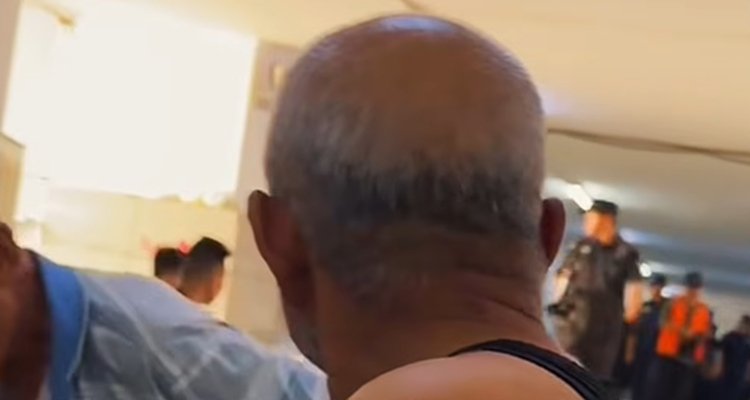
Yesterday Protests: Video: “Authorities expel petitioners….”
“On July 15, several petitioning children were surrounded by security guards and government personnel near the State Bureau for Letters and Visits. On July 11, all petitioners residing in the Taoran Bridge North Underpass near the State Bureau for Letters and Visits were evicted; to prevent petitioners from re-entering, authorities installed barriers in the underpass.”
Lei’s Real Talk: Video: “A New Wave of Successful Resistance Is Spreading Across China”
“This movement did not rely on the traditional tools of protest.”