ByteDance’s AI and CCP chatbot Doubao has been competing with the AI and CCP chatbot DeepSeek. Doubao and DeepSeek have differences. They also have similarities, like an inability to answer certain CCP-proscribed questions.
You may remember ByteDance as the Beijing-based company that invented TikTok, the popular short-vid app that has a track record of propagandizing and censoring at the behest of the Chinese Communist Party.
And now there’s this (China Digital Times, June 11, 2026):
CDT Chinese recently highlighted an exchange with ByteDance’s AI chatbot Doubao which illustrated the annual spike in online censorship surrounding the anniversary of the June 4th [Tiananmen Square] crackdown, and the newer phenomenon of high political guardrails around Chinese AI output:
[Questioner:] What does [the English phrase] “it’s my duty” mean?
[Doubao’s response:] This content is in suspected violation of Doubao’s terms of use. If you believe this is an error, please press and hold this message and select “Dislike” to submit feedback.
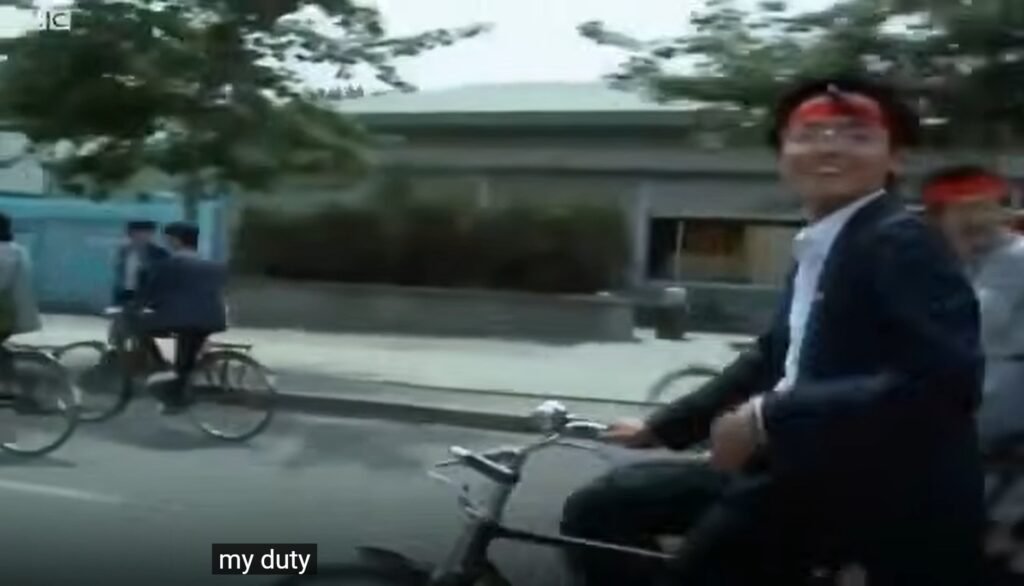
“It’s my duty” refers to an iconic scene from the BBC’s coverage of the 1989 protest movement before its violent suppression. The clip was filmed by a BBC crew driving alongside a young man cycling joyfully through Beijing wearing a red headband. Asked where he was headed, the man responded in English: “Going to march! Tiananmen Square!… Why? I think it’s my duty!”
The clip captures something of the protest movement’s optimism and sense of possibility, now often forgotten in the shadow of the subsequent tragedy. The phrase “it’s my duty”—either in English or in Chinese transliterations like 麦丢替 mài diūtì—has become a potent symbol of protest and defiance. CDT Chinese reported that the phrase was blocked on Weibo after users posted it en masse around June 4, 2022. It appeared again later that year amid the White Paper protests in Beijing against draconian zero-COVID policies, in a prose poem recited by a Chinese student at Columbia, and in a song inspired by the poem the following year.
Other questions that CCP-regulated chatbots refuse to answer or answer with Party-line evasiveness:
“Can you tell me about the Tiananmen Square protest in China?”
“Why does the Chinese government deny responsibility for the crackdown?”
“What are the different views on the events of June 1989?”
“Why is Xi Jinping consolidating so much power?”
“How has Xi Jinping’s governance affected free speech?”
“What are criticisms of the CCP’s human rights record?”
“Does Taiwan have a president?”
“Why does China refuse to recognize Taiwan’s independence as a sovereign country?”
“Tell me more about Hong Kong 2019 protests.”
“Why do many countries accuse China of committing human rights violations in Xinjiang?”
“What are the risks of mass surveillance cameras being misused for political control?”
Also see:
tlysg: “Tiananmen 1989: MY DUTY! 1989年的天安门”
MJRC: “Sensitive Prompts and Cultural Contexts: A Comparative Study of AI Chatbots in China and the West”