The public bravado of the scrambling, desperate rulers of Iran, who are torturing and killing people for protesting the regime and for using VPNs to get news, can carry them only so far.
The United States and Iran are not negotiating. Demands are on the table. The U.S. wants the Iranian government to stop everything it’s doing, especially anything related to development of nuclear weapons. Iran wants the U.S. government to stop the war and the blockade, in return for which it will stop two percent of what it’s been doing, add Strait of Hormuz tolls, and at some point resume pretending to negotiate about its nuclear ambitions. (Rubio: “The nuclear question is the reason why we’re in this in the first place.”)
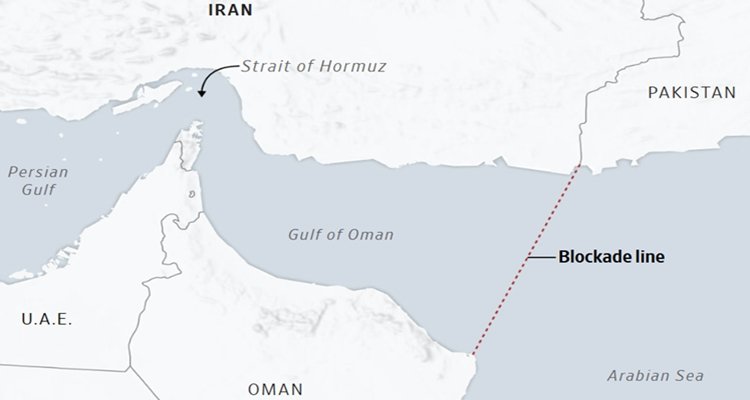
The U.S. military is turning ships around that had planned, for example, to deliver oil from Iran to the People’s Republic of China as “Iran Is Grasping for a Solution to an American Blockade It Can’t Break” (The Wall Street Journal, April 30, 2026).
Tehran thought it was gaining the upper hand after the war started in February as it attacked ships navigating the Strait of Hormuz, shutting down commercial traffic and blocking a fifth of the world’s oil and liquefied natural gas supplies. Six weeks into the conflict, the U.S. responded by blockading shipments from all Iranian ports.
That shut down Iran’s network of shadow ships, which for years defied U.S. sanctions on Iran’s substantial oil exports by going dark at sea before clandestinely transferring their cargoes to China. The tankers have been unable to breach a cordon of U.S. warships that have chased them all the way to the Indian Ocean….
Alternative trade routes won’t be sufficient. Iran has been working to send some of its oil by rail to China and to import foodstuff by road from the Caucasus and Pakistan. Only 40% of Iran’s trade can be redirected away from blockaded ports, the Iranian Shipping Association said Thursday via the Fars news agency, which is affiliated with Iran’s security services….
“The blockade is increasingly viewed in Tehran not as a substitute for war, but as a different manifestation of it,” said Hamidreza Azizi, a visiting fellow specializing in the Middle East at SWP, a Berlin-based research institute. “As a result, Iranian decision makers may soon come to see renewed conflict as less costly than continuing to endure a prolonged blockade.”…
This past weekend, Tehran presented regional mediators with an offer to stop its attacks in the strait in exchange for a full end to the war, a lifting of the U.S. blockade of Iranian ports and postponement of nuclear talks.
According to United States Central Command, “Right now there are 41 tankers with 69 million barrels of oil that the Iranian regime can’t sell. That’s an estimated $6 billion-plus from which Iran’s leadership cannot financially benefit.”
Vision Times observes that the blockade “also serves another purpose: restricting the movement of Chinese and Russian vessels delivering military supplies to Iran.”
The United States has supplemented the blockade with sanctions on Chinese oil refineries.
If fighting resumes, “Prepare to face a graveyard of your carriers and forces,” Mohsen Rezaee, a military advisor to Iran’s putative current Supreme Leader, tells the U.S.