Or both. A weak, cornered king of the jungle may lash out and reassert control for the moment but still be in a weak and deteriorating position.
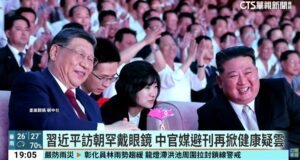
Xi Jinping is still there, still in charge. Information about the recent toppling of a top general, Zhang Youxia (shown above), head of the Central Military Commission, and another, Liu Zhenli, head of the Joint Staff Department of the Central Military Commission, is fragmentary and inconsistent. The conclusions of analysts largely depend on the perspectives on Chinese Communist Party politics that they bring with them. Some interpreters dismiss “wild rumors,” e.g., of an attempted Zhang-led coup against Xi, others credit them as likely or at least possible because consistent with other things they know or believe about internecine CCP warfare.
Also, we are told, Taiwan is unlikely to be invaded in the near future because the PLA’s military command has been gutted. Or it may very well be invaded in the near future because Xi Jinping needs a distraction from all the CCP politics and the shakiness of his position. Or because the replacement generals will be more obedient and gung ho.
Corruption or disloyalty
Reuters says that all this has been about “corruption” and that the status of Zhang at the time of his downfall was that of “long-term ally” (Mint says Zhang Youxia was “Xi’s closest military ally”). Also that Taiwan is probably safe from invasion for now (January 26, 2026).
China’s investigation into its top general is taking President Xi Jinping’s years-long corruption purge into his innermost circle, underlining that even close personal ties do not offer protection when it comes to loyalty to the party leadership. [“Corruption” purge or disloyalty purge, take your pick.]
China experts said Xi’s move against his long-term ally and Politburo member Gen. Zhang Youxia also concentrates even more power in the president’s hands, makes the already secretive command of China’s military more opaque, and suggests that a near-term attack on Taiwan is less likely.
Reuters also quotes an analyst, Lyle Morris, who suggsts that a primary focus on “corruption” is the wrong track: “To invoke violating the Chairman Responsibility System [as CCP media has done] suggests Zhang had too much power outside of Xi himself.”
Morris also says, though: “For Xi to undertake such a dramatic move suggests two things: Xi has the full support of the Chinese Communist Party, and Xi is confident in his consolidation of power over the military.”
Confidence in the full support of the Party that contains a faction in the PLA more loyal to Zhang than to Xi? If, last week, Xi had been not confident but only desperate, would he have refrained from going after Zhang if the only realistic alternative were losing power himself?
The Guardian quotes Alfred Wu, a professor in Singapore, who believes that Zhang’s “recent appearance alongside Xi and his nomination to the CMC at the 20th party congress in 2022, when he was past the normal retirement age, indicated that he was a trusted figure until relatively recently. ‘Corruption does not just happen overnight,’ Wu said.” So the problem Xi has with Zhang is Zhang’s corruption.
But the Guardian also quotes former CIA analyst Dennis Wilder, who “said a power struggle was a more likely explanation than corruption. The purge ‘isn’t about corruption, it isn’t about leaking secrets, it is about a general that became too powerful,’ he said.”
Taiwan
As for Taiwan, “Some argue that the purges make an attack on Taiwan less likely, at least in the short term, because the army does not have the high-level decision-making capacity to launch a sophisticated operation. ‘It gives the US military more time to prepare for a Taiwan conflict,’ said Wilder. Others caution that the ousted men could be replaced by a younger, more aggressive lineup of officers who are unlikely to question their leader.”
Then there’s this, from a January 25 Wall Street Journal piece: “China’s Top General Accused of Giving Nuclear Secrets to U.S.”
China’s senior-most general is accused of leaking information about the country’s nuclear-weapons program to the U.S. and accepting bribes for official acts, including the promotion of an officer to defense minister, said people familiar with a high-level briefing on the allegations….
But the people familiar with the briefing—which hasn’t been reported until now—said Zhang is under investigation for allegedly forming political cliques, a phrase describing efforts to build networks of influence that undermine party unity, and abusing his authority within the Communist Party’s top military decision-making body, known as the Central Military Commission.
Lei of Lei’s Real Talk believes that the Journal’s reporters have been duped if they accord any credibility to this accusation. “Only a fool would believe that Zhang Yuxia would disclose sensitive nuclear weapons information to the U.S. in the way described by the journal…. [The purpose is] cognitive warfare…because Xi Jinping desperately needs to justify his actions.”
The New York Times talks about Xi’s campaign against “corruption and disloyalty” and finds the real bottom line: “In Xi’s China, Even the Mightiest General Can Fall.” We know this because the mightiest general has just fallen.
Disloyalty or corruption
Also: “What prompted Mr. Xi to finally turn against General Zhang is now a topic of fevered speculation in Beijing and beyond. Some experts believe that Mr. Xi may have come to see General Zhang as too powerful after the general’s own rivals were toppled [by Xi or by Zhang?] in previous purges. Others believe Mr. Xi concluded that systemic corruption was so deep that he needed drastic surgery to clear the way for a new generation of commanders.”