China Digital Times has now published the second half of its overview of notable material censored on China’s CCP-hamstrung Internet (January 9, 2026).
Some of the most-censored content in the last months of the year:
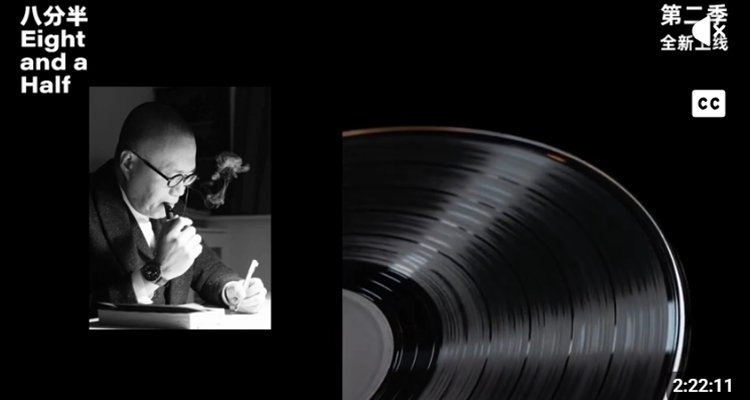
August 2025. “Hong Kong writer and commentator Leung Man-tao’s podcast ‘Eight and a Half Minutes’ was yanked from Chinese streaming platforms after he discussed media mogul Jimmy Lai, currently facing national security charges in Hong Kong. (Leung’s [Chinese-language] podcast remains available on Apple Podcasts. [Also on the @8fenban channel of YouTube.])
September 2025. “There was heavy censorship of content related to Nepal’s Gen Z protest movement, which began in response to widespread corruption and an unpopular government ban on 26 social media platforms, and resulted in a victory for the protesters: the social-media ban was lifted, Prime Minister K.P. Sharma Oli resigned, the House of Representatives was dissolved, and new elections were set for March 2026.”
October 2025. “There was frustration over media silence after a Xiaomi SUV plowed into a crowd of students and parents near an elementary school in Shiyan, Hubei province, killing one person and injuring at least four. When local outlet Shiyan Evening News sought to absolve itself by pleading on Douban, ‘Our hands are tied, too,’ one commenter countered, ‘Then what’s the point of you?’ ”
November 2025. “Shanghai-based news outlet The Paper excoriated Tencent’s censorship of The Paper’s video investigative report into e-commerce live streamers making false claims about the ‘height-boosting’ properties of a brand of milk powder. The Paper accused Tencent of acting as an ‘automated editor-in-chief,’ overriding legitimate journalism and the public’s right to know.”
December 2025. “The ongoing Sino-Japanese diplomatic spat resulted in Chinese authorities nixing performances by Japanese entertainers: J-pop singer Maki Otsuki was forced to leave the stage mid-song, while songstress Ayumi Hamasaki had her Shanghai concert canceled but proceeded to perform to an empty arena. Hamasaki later apologized to and thanked her Chinese fans on social media.”
China Digital Times observes that by 2025, the CCP’s online censorship had “evolved into a proactive, content-blocking juggernaut capable of anticipating what type of information might ‘spin out of control.’ Under such a mechanism, any form of expression may be viewed as a potential threat, because even analysis and explanation poses an inherent risk, and heated online discussion is perceived as a loss of control. Thus does the censorship apparatus mold an online public-opinion environment that appears spontaneous but is in fact highly selective and intensely filtered.”
Also see:
StoptheCCP.org: “Most Notable China-Censored Posts of 2025: Part One”