It’s always a time for choosing in Taiwan. In an op-ed for the Taipei Times, Chu Meng-hsiang observes that the Chinese Communist Party has “once again launched a ruthless repression campaign against Democratic Progressive Party Legislator Puma Shen.”
From threatening to pursue a global arrest warrant to disseminating satellite photographs of Shen’s workplace and residence in Taipei, the threats are now aimed directly at Taiwan.
This is not merely personal intimidation, it is a direct challenge to Taiwan’s sovereignty and democratic system. Shen has long strived to dismantle the CCP’s information warfare and advocated for whole-of-society defense—it is precisely because he hits the nail on the head that he has become a target that the CCP is determined to eliminate….
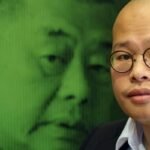
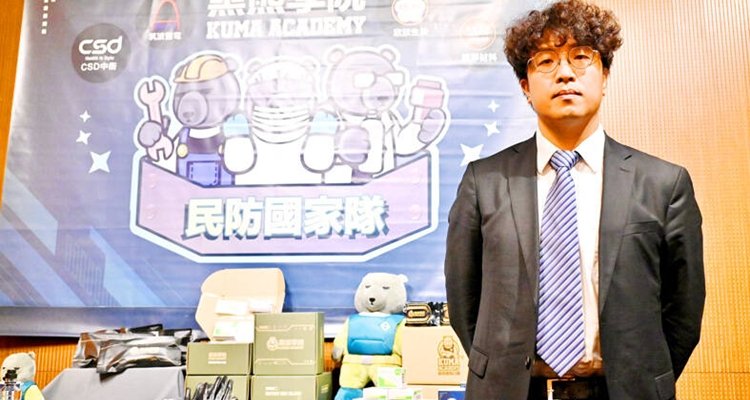
For citizens of the Republic of China who value life, liberty, and country, only one rational response to the CCP’s attacks on Puma Shen (shown above) is possible. But there have been two. Or three; for the second response has two forms, one just cowardly, the other also vicious.
On one hand, civil society has rallied around the slogan “We are all Puma Shen,” demonstrating both clarity and resistance. On the other hand, some politicians and members of the public have opted for self-censorship out of fear of causing “misunderstandings” with the CCP, thereby allowing the battle to defend Taiwan to devolve into one of internal friction….
Even more perverse is that, when Shen was threatened, Legislative Speaker Han Kuo-yu and other Chinese Nationalist Party (KMT) legislators not only failed to condemn the CCP, but instead mocked Shen—with some even suggesting that he travel to China to “clear up the misunderstanding.”
At a time when the CCP had already listed Shen as wanted and trampled on Taiwan’s judicial sovereignty, proposing to send a colleague into enemy territory is not just naive but demonstrates complete apathy [with regard to] sovereignty and national security. For the CCP, there has never been any “misunderstanding”—there is only surrender or resistance.
In June 2024, the Chinese Communist Party announced that it was entitled to murder those whom it called “diehard” Taiwan independence separatists. In the Party’s eyes, Puma Shen qualifies, as demonstrated by its recent harassments of and propaganda about him. If the mainland gets hold of him, he risks more than the discomfort of a heated discussion.
Chu Meng-hsiang concludes that the crisis confronting Taiwan “has never been limited to external threats” but also includes the threats to internal unity—unity at least about the wisdom of defending against those external threats.