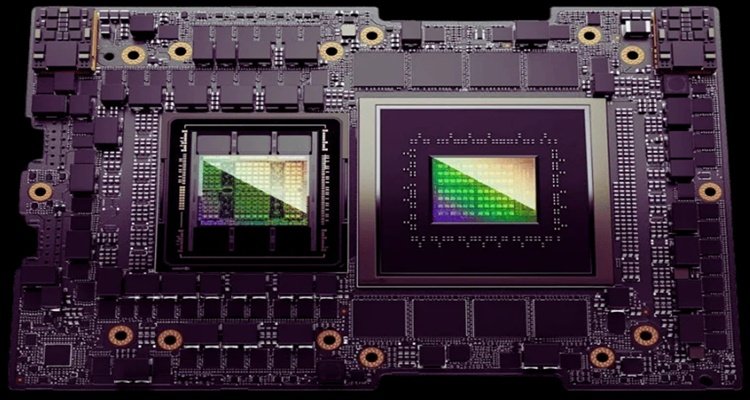
A White House AI czar has suggested that China may forego some of the most powerful weapons it can get for the sake of boosting its domestic tech industry (Bloomberg, December 12, 2025).
The weapon in this case is Nvidia’s H200 AI chip, reported to be Nvidia’s second-most-powerful chip, which the Trump administration has controversially agreed to allow Nvidia to sell to China-based buyers. (But don’t worry, the president says; Nvidia’s most powerful microchip is still subject to export controls keeping it out of China.)
AI czar
David Sacks, the “White House AI czar,” which I guess means that President Trump listens to his views on policy related to artificial intelligence, had argued, as paraphrased by Reuters, that “shipping advanced AI chips to China discourages Chinese competitors like Huawei from redoubling efforts to catch up with Nvidia and AMD’s most advanced chip designs” (December 9, 2025)
In any case, soon after Nvidia was given the okay to sell the H200 to China, Sacks said that the Chinese government has figured out the U.S. strategy in the matter of H200 sales (there’s a strategy) and is working to foil it. The CCP is cleverly rejecting addition of this extra weapon to its tech arsenal.
Bloomberg:
“They’re rejecting our chips,” Sacks said in an interview on Bloomberg Tech, citing an unspecified news article he had seen that day. “Apparently they don’t want them, and I think the reason for that is they want semiconductor independence.”
It turns out, though, that “reject” means “regulate” and “limit”:
In a social media post Saturday, Sacks said he was referring to a Financial Times report that China was poised to limit access to the chips via a local approval process where Chinese buyers would need to justify their purchases.
Here’s what Financial Times said (December 9, 2025):
Beijing is set to limit access to Nvidia’s advanced H200 chips despite Donald Trump’s decision to allow the export of the technology to China as it pushes to achieve self-sufficiency in semiconductor production.
According to two people with knowledge of the matter, regulators in Beijing have been discussing ways to permit limited access to the H200, Nvidia’s second-best generation of artificial intelligence chips….
The two regulators in charge of Beijing’s years-long semiconductor independence campaign—the National Development and Reform Commission and the Ministry of Industry and Information Technology—could apply other measures to ensure the competitiveness of domestic chips, the people said, including banning China’s public sector from buying the H200.
The return of Nvidia’s advanced chips would be welcomed by tech giants such as Alibaba, ByteDance and Tencent, which have been using more Chinese chips for some basic AI functions but still prefer Nvidia’s products because of their higher performance and easier maintenance.
The Council on Foreign Relations, which also has knowledge of the matter, observes:
It is indisputable that the decision [to let Nvidia sell the H200 to China] aids a competitor in the short term. China’s Premier Li Qiang, DeepSeek’s CEO, and other Chinese tech leaders have explicitly pointed to the lack of Nvidia chips as limiting China’s AI development. The decision will not just further China’s ability to build frontier AI models, it will also support China’s efforts to scale data centers that could directly challenge U.S. companies seeking to compete for international markets. So while the export of a single Nvidia chip—and not even their most advanced chip, the Blackwell—could appear minor to some U.S. observers, it is a major development for China.
Also indisputable is that short terms add up to the long term.
In conclusion
The Chinese government is not rejecting the H200 chips sale of which to China has been authorized by the Trump administration. Chinese regulators may limit their use in some unspecified, yet to be determined manner. So far, the U.S. decision to allow China to have H200 chips seems to mean that China will in fact get H200 chips. And use H200 chips. It’s not important unless we care about propaganda applications, censorship applications, surveillance applications, military applications, and so forth.