The radar locks are probably not a prelude to (immediate) war. They are probably a prelude to the next episode of PRC harassment of Japan for having openly suggested last month that Japan would likely help Taiwan if the People’s Republic of China invaded Taiwan (Reuters, December 6, 2025).
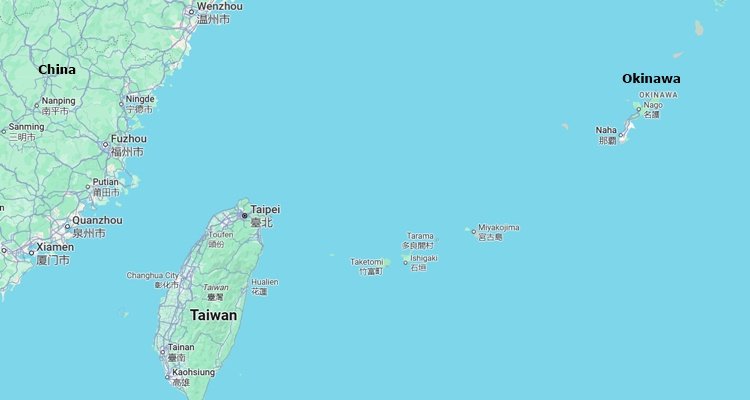
Japan said early Sunday that it has protested to China after a military jet that took off from the Chinese carrier Liaoning locked its radar on Japanese fighter jets near the southern island of Okinawa, the latest spat between the two countries whose ties have plunged recently over the Japanese leader’s Taiwan remarks.
Japan’s Defense Ministry said China’s military aircraft J-15 “intermittently” targeted its radar at Japanese F-15 fighter jets on two occasions Saturday—for about three minutes in the late afternoon and for about 30 minutes in the evening.
The radar lock by the Chinese aircraft was detected by different Japanese fighters that had scrambled against a possible airspace violation by China, according to the ministry. There was no breach of Japanese airspace, and no injury or damage was reported from the incident….
Japanese F-15 fighter jets, scrambled in case of an airspace violation, were pursuing the Chinese aircraft at a safe distance and did not involve actions that could be interpreted as provocation, Kyodo News agency said, quoting defense officials.
One locks radar on an enemy plane to track it and to enable missiles to hit it. Not a friendly act. “Directing fire-control radar at another aircraft…signals a potential attack….”
Defense Minister Shinjiro Koizumi said the radar lock was “a dangerous act that exceeded the scope necessary for safe aircraft operations.” Japan has lodged a protest.
Australia weighs in
While in Tokyo, the Australian defense minister, Richard Marles, told reporters that the Australian government is “deeply concerned by the actions of China in the last 24 hours. We expect those interactions to be safe and professional.”
You have to cut people some slack for the imprecisions of extemporaneous speech. But nobody who has been paying attention to how Chinese ships and planes behave when near other countries “expects” that their interactions in the water or in the air will be “safe and professional.” Perhaps the idea being intimated is more along the lines that Australia “would really appreciate it if those interactions were safe and professional.”
Marles also said that Australia stands with Japan “in upholding that rules-based order.” He also said that China is Australia’s biggest trading partner and that Australia wants to have good relations with China. World, it’s not a good idea to be both constantly threatened by China and heavily dependent on trade with China.