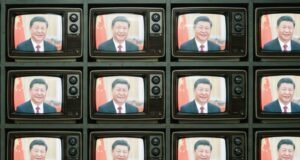
Freewheeling, irreverent—lots of adjectives like these might apply to comedians on China’s comedy scene, which flourishes when it’s not being banned. It’s okay to be funny on stage in China. About trivia.
That’s not quite fair. Anything that passes muster with the censors is fine. Anything at all. Maybe (Bloomberg, November 28, 2025).
China’s stand-up scene is booming, with comedy venues now the second-largest theater draw after stage plays, as viral online shows fuel demand for live performances. Since its debut in 2024, The King of Stand-Up Comedy alone has drawn tens of billions of views online.
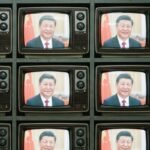
Although Communist Party censorship keeps domestic politics strictly off limits, there’s plenty of material for China’s growing roster of comics: losing money in the volatile stock market, punishing work hours, pressure to marry and have children, and the desire to drop out of the rat race and “lie flat.” Donald Trump also generates his fair share of punchlines, as a “crazy” and “illogical” president who tweets way too often….
In China, comedy clubs must submit all scripts to authorities for approval before performing them, a process that can take a month or more. Crafting humor that avoids politics, vulgarity or controversial social affairs takes experience, says Zilong Feng, who navigated such boundaries when he ran Hardcore Comedy shows in cities including Shenzhen and Beijing.
It’s dangerous to go off-script or even to stay on-script.
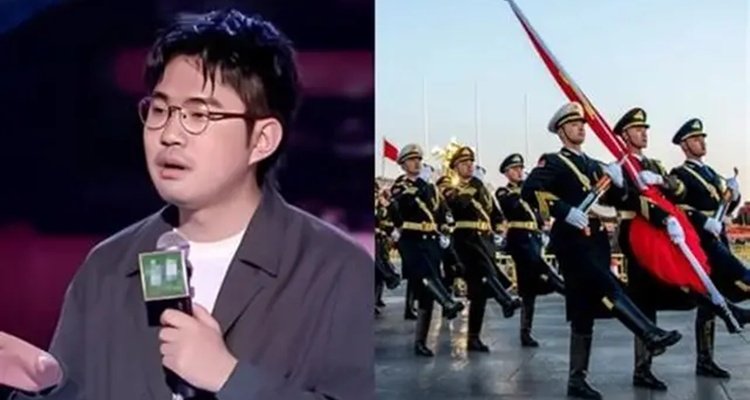
In May 2023, a comedian named Li Haoshi aka House (shown above) “used a famous slogan about the People’s Liberation Army—‘excellent style and capable of winning battles’—to describe two dogs chasing a squirrel. A patriotic audience member accused him online of insulting the military, triggering a national backlash. State media condemned the act, and all comedy shows were suspended. Xiaoguo [Laughing Fruit Culture] was fined $2 million, and Rock & Roast was canceled that summer.”
The incident illustrates the fact that Chinese comedians must be even better attuned to what is off-limits than the censors. Even if a joke gets a go-ahead, the joke-teller and many other people may still get in trouble if a line rubs somebody the wrong way.
The Bloomberg reporter says that Li Haoshi’s joke about the valiant squirrel-chasing dogs was “off-script.” But World Crunch recalls that Laughing Fruit had sent a video of House reading the script and a printed copy of the script to Beijing’s Bureau of Culture and Tourism for vetting. “The same routine approval process that allowed the show to proceed was now under scrutiny, leaving stand-up comedians in a precarious situation: Official approval no longer guaranteed safety.”
Perhaps House did ad-lib the line that got him, his company, and his fellow comedians into so much trouble. But it takes a special kind of “patriot” to regard the joke as anything but innocuous, and it’s easy to imagine that it might slip past the censors.
Foreign comedians like Dave Chapelle “would starve to death” if they had to ply their wares in China, suggests one Chinese comic.