Reportedly it was the U.S. president, Donald Trump, who initiated recent calls not only to the PRC’s Xi Jinping but also to Japan’s Sanae Takaichi about the pseudo-problem of Japan’s willingness to defend itself if the People’s Republic of China attacks the Republic of China.
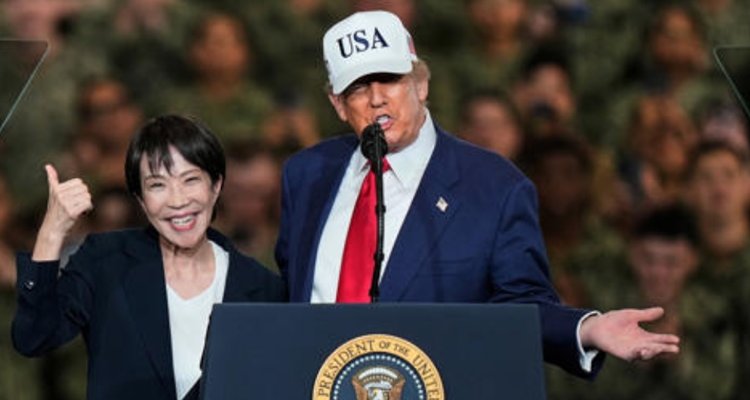
Takaichi says that in her phone conversation with Trump, the two leaders “broadly discussed strengthening the US-Japan alliance and the situations and issues that the Indo-Pacific region faces. Within that discussion, President Trump explained the latest state of the US-China relationship, including his phone call with the Chinese leader.”
Escalation
An NBC News piece begins by saying via headline that “Trump wades into China and Japan’s escalating dispute over Taiwan” (November 25, 2025).
Which right away implies a falsehood, that both China and Japan have been “escalating” a dispute over a mere statement by Prime Minister Sanae Takaichi of Japan’s longstanding policy of willingness to come to the aid of Taiwan if it were attacked by mainland China.
It was a PRC diplomat who engaged in full-throttle escalation by, in response, unambiguously threatening to decapitate the Japanese prime minister. Or did so in a statement “seen as threatening,” as some reporters reluctant to commit to the obvious would have it.
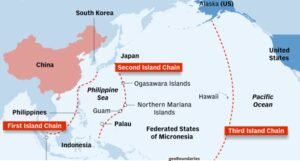
The dispute began when Takaichi, who was elected last month, told lawmakers that a hypothetical Chinese attack on self-ruling Taiwan, which at its closest point is about 70 miles from Japanese territory, could threaten Japan’s survival and trigger a military response from Tokyo.
It was the first time such an explicit remark had been made by a sitting prime minister of Japan, which like the United States has long been deliberately vague [not consistently though; see the Biden administration] as to whether it would intervene militarily in the event of an attack on Taiwan.
China, which describes Taiwan as its “core of core interests,” has responded with outrage, taking the dispute to the United Nations, advising its citizens against traveling to Japan and seeking economic retaliation against Japanese seafood, movies, concerts and more.
On Monday, China criticized Japan’s plan to deploy missiles on an island near Taiwan as a deliberate attempt to “create regional tension and provoke military confrontation,” while Japan scrambled a fighter jet after it detected a Chinese drone flying between Taiwan and the Japanese island of Yonaguni.
Though Takaichi has refused Beijing’s demands that she retract her “erroneous” remarks, her government says Japan’s policy on Taiwan has not changed and it continues to favor a peaceful resolution to the issue.
Having merely confirmed standard policy in her statement to parliament, the new prime minister of Japan can only continue to refuse to reverse herself in the face of the Chinese Communist Party’s standard histrionic pique and intimidation.
The Chinese government must have known before now what Japanese policy has been, so its routine escalatory high dudgeon is more likely a calculated test of the new Japanese leader than a foreshadowing of plans to invade Japan by the end of the month. (Though Japan, like the ROC, like the Philippines, like other countries in the region should be prepared for such an invasion.) If Takaichi does back down, muttering something like an apology, that won’t be the end of the matter.