We’re not quite done with interpreting interpretations of Xi Jinping’s current status in relation to the Chinese Communist Party. The behind-the-scenes plot to depose Xi Jinping that had been inferred from rumors and signs—some of the reasoning was convincing—failed to materialize by the end of October’s Fourth Plenum. But many China watchers believe that Xi has nonetheless lost control of the military and is otherwise weakened even though he still nominally holds all the major posts he held before the Plenum.
The evidence that Xi is on political life support includes what Party outlets and top officials are saying or not saying and how.
One of the latest confirmations of Xi’s accelerating decrepitude is offered by the Vision Times. Author Li Jingyao looks at shifts in CCP propaganda, shifts that may not seem momentous in the perceptions of the untutored (“Xi’s ‘Hard Standard’ Gives Way to a New ‘Imperial Edict’ After CCP Fourth Plenum,” November 10, 2025).
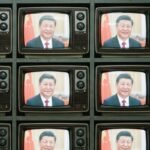
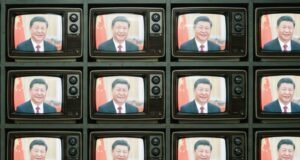
In the weeks following the Fourth Plenary Session of the 20th Central Committee, a subtle but unmistakable shift has rippled through China’s political apparatus. State media outlets, long known for their ritualized devotion to Xi Jinping, have suddenly begun emphasizing a new phrase: “Study Deeply and Comprehend Thoroughly.”
Once, the hallmark front-page “hard standard” of “Xi Jinping Thought on Socialism with Chinese Characteristics for a New Era” was mandatory in headlines. Now, that once-untouchable formula has been quietly shrunk, buried deeper in text, or omitted entirely.
Analysts say this linguistic downgrade signals a deeper reality: Xi Jinping, after losing control of the military, may now be losing his grip over the Party itself. Some observers even suggest that the military has taken de facto control of the propaganda system, with a silent political realignment now unfolding across China’s bureaucratic core….
Political commentator Jiang Feng argues that “Study Deeply and Comprehend Thoroughly” is not a new slogan but a new imperial edict…. “It’s a coded directive,” Jiang said. “You must grasp its meaning. If you ‘comprehend’ too late, you’ve pledged loyalty to the wrong master. If you comprehend early and withdraw in time—you might survive.”
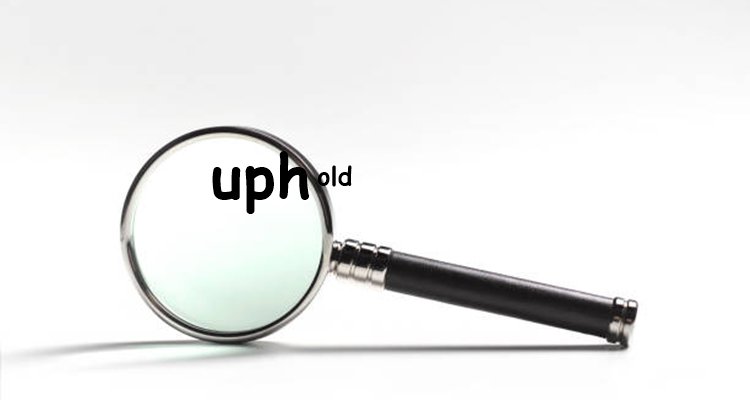
Conscious use of the phrase “deeply comprehend” supposedly implies that the speakers or writers are still mulling the political situation, not merely offering blanket support. They are, says Jiang, “waiting to see where the wind blows.” Jiang also says that when Chen Wenqing, secretary of the Central Political and Legal Affairs Commission, says that “The Two Establishes are the fundamental political guarantee” instead of how people need to “Firmly uphold the Two Establishes,” he is signaling a “five-point drop in political obedience.”
You have to be immersed in CCP lingo and the history of its permutations to properly assess such indications, assuming that they do indicate anything substantive. What seems incontrovertible is that both Xi and the Party face severe ongoing problems—as they have for many years. Gordon Chang’s The Coming Collapse of China was published 25 years ago. Maybe one or more of the CCP edifices is about to crumble, maybe not.