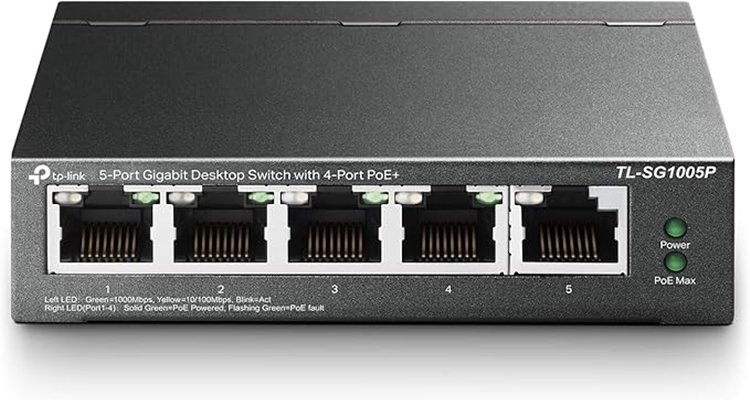
TP-Link is a popular router. Also a dangerous one, since the gadget puts the company that makes it in a position to gather information for the Chinese Communist Party or to clear a path for cyber attacks coming out of China.
The CCP requires China-based companies subject to its oversight to be ready to lend a hand in the areas of espionage and surveillance—and to do so without telling anybody. It’s a provision of what passes for a law code in the PRC. A Chinese firm is more likely to be called on if it is international, sells tech products, is involved with communication and the Internet, and is very successful.
Proposed ban
For such reasons, some at the Commerce Department and other U.S. agencies want to outlaw the sale of TP-Link routers in the United States (CNET, November 8, 2025).
The proposal, which arose from a months-long risk assessment, calls for blocking sales of networking devices from TP-Link Systems of Irvine, California, which was spun off from a China-based company, TP-Link Technologies, but owns some of that company’s former assets in China. The ban was proposed by the Commerce Department and supported this summer by an interagency process that includes the Departments of Homeland Security, Justice and Defense, [people familiar with the matter] said….
If imposed, the ban would be among the largest in consumer history and a possible sign that the East-West divide over tech independence is still deepening amid reports of accelerated Chinese government-supported hacking. Only the legislated ban of Chinese-owned TikTok, which President Donald Trump has averted with executive orders and a pending sale, would impact more U.S. consumers….
A White House spokesperson asked about the proposed ban declined to address it specifically. “We are aware of active efforts by the Chinese government to exploit critical security vulnerabilities and are working with all relevant parties to assess exposure and mitigate the damage,” the spokesperson said.
The company whose products would be banned, nominally TP-Link Systems, in California, says that the concern about spying for China is baseless. Through spokesmen, the company says: “TP-Link is a U.S. company committed to supplying high-quality and secure products to the U.S. market and beyond.” And: “Any adverse action against TP-Link would have no impact on China, but would harm an American company.”
Is it true that nothing could be more separate and distinct than the U.S. TP-Link Systems and the PRC TP-Link Technologies?
Two firms
TP-Link Systems was calved from TP-Link Technologies, which is based in Shenzhen, China. It’s possible that leaders of the U.S. spinoff do find the concern about their routers to be absurd.
It’s also possible that the parent company can, from China, covertly extract information acquired from the daughter company’s routers. The mere fact that a spinoff of a Shenzhen-based firm operates in Irving, California and claims to be independent of the parent company in Shenzhen does not show that the Party has no hold over it.
Especially when, according to Bloomberg report, even though a restructuring of TP-Link “split the company into separate US- and China-headquartered businesses…the resulting American venture still has substantial operations in mainland China.”
What TP-Link hasn’t advertised—but which Chinese corporate records and government announcements show—is that much of the research, development and manufacturing operations of Jeffrey Chao’s new US company remain in China, entrenched in the country’s state-sponsored technology ecosystem, despite the restructuring….
While the company has said products imported into the US are made in a factory it owns in Vietnam, trade data and Chinese-language corporate materials indicate the facility is effectively a final assembly point. TP-Link confirmed that, aside from components bought in Vietnam that account for 0.5% of the total value of inputs to the plant there, all other components are imported from China.
About half of those components are made in China, while the rest are items such as chips that are imported to China from places such as the US and Taiwan before later being exported to Vietnam, the company said, adding that it’s planning to reduce its manufacturing reliance on China.
If a lot of the U.S. company is in China, “entrenched in the country’s state-sponsored technology ecosystem,” the CCP seems to have plenty of opportunity to do stuff like lay the groundwork for surveillance and cyber attacks.
A U.S. ban on sale of TP-Link routers may never happen, though. U.S. government officials determined to respond to the threat posed by the PRC are resisted by other U.S. officials eager to avoid imperiling the latest close-to-final U.S.-China trade framework.