We can’t say we weren’t warned by “China’s brandishing of its rare earths weapon in the fight over trade,” which provides us with “a cautionary signal for what might come during a more momentous conflict,” says Rich Lowry (October 21, 2025, King Features Syndicate).
In response to this unsubtle signal (and all the other evidence of the nature and aims of the People’s Republic of China), what can we do but desist as rapidly as possible from dependency on China for the mining and processing of the rare earths that we need in order, among other things, to protect ourselves from China?
This dependency “ranks as one of the most fantastically stupid and self-damaging strategic missteps of our time.”
A focus of President Trump’s just-concluded meeting with Australian Prime Minister Anthony Albanese was forging an agreement to jointly invest in critical-minerals projects. There has to be more where that comes from. The U.S. must push on all fronts to address a truly dangerous strategic vulnerability….
Between 2019 and 2022, the GAO notes, the U.S. imported more than 95 percent of the rare earths we consumed, overwhelmingly from China….
It wasn’t so long ago, back in 1991, that the United States was the biggest supplier of rare earths. Then, China undertook a concerted, very successful effort to steal the mining and processing of rare earths out from under us. As a report in the Wall Street Journal relates, it restricted foreign involvement in mining in China. It handed out tax rebates to goose production. It bought a key U.S. rare earths business and shipped its equipment to China. In due time, it squeezed out the U.S. rare earths industry, and it has maneuvered to maintain its dominance since.
It’s been industrial policy as highly consequential geopolitics. There is no alternative but answering in kind, which the Trump administration, to its credit, is undertaking now.
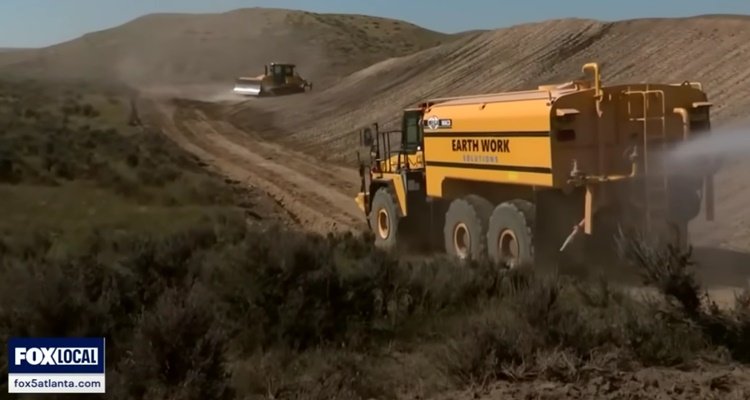
The U.S. has some of the necessary capacity already, but this needs to be massively expanded, which will in part require thwarting the obstructionism of sundry regulators and other foes of industrial development.
It won’t be easy to develop all the necessary facilities but, Lowry points out, “we aren’t talking about a technical or logistical challenge on par with, say, the Manhattan Project.” And that took only a few years: six if you start the timeline with the 1939 Einstein-Szilard letter to FDR about uranium fission and the potential for “extremely powerful bombs.”
Also see:
StoptheCCP.org: “The Mad, Mad, Mad, Mad World of Rare Earths”