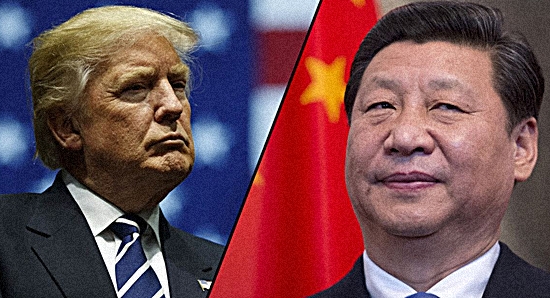
Bloomberg columnist Hal Brands wonders whether President Trump will settle on zig mode or zag mode in his dealings with Xi Jinping and the People’s Republic of China. Although Donald Trump understands power and leverage, he “also has a bad habit of hoping personal relationships can resolve geopolitical disputes.”
Thus, “If Trump uses his dealings with Xi to manage tensions in the short run, while preparing urgently for the future, he’ll be on the right track. If he really believes that personal diplomacy will make everything fine, then he, and America, will be in for nasty shocks.”
So far, the Trump administration has shown substantial willingness to prepare for the future—i.e., to deal with the People’s Republic of China in a way that recognizes what it actually is—but also a substantial willingness to retreat from realistic policy when blasted by PRC bluster.
Overrated
National Review’s Thérèse Shaheen warns that “Trump Is Playing China’s Game.” She recalls that “when President Trump and his team climbed down from the first round of high tariffs that were imposed on China back in April, I cautioned that capitulating without tangible results would be bad for the administration and for America” (October 19, 2025).
What she wants to stress now is that China is not really the unstoppable economic behemoth that it would have the world believe it is. She argues that the true state of its internal affairs should be given much more weight when assessing China’s strength and determining how to counter CCP aggression.
Beijing wants, above anything else, to project strength and to have the world focus on its supposed dominance of the tech economy rather than on its macroeconomy, which is quite weak. By responding to the challenge of China’s export controls on key high-tech enablers rather than pushing harder on the enduring soft spots of the Chinese economy, Trump is actually encouraging Xi to become more belligerent….
Trump’s own continued overtures about how much he and Xi get along, and his eagerness for a meeting, is only encouraging further Chinese audacity. CCP demands now include U.S. concessions on Taiwan and the relaxation of semiconductor controls that the U.S. has imposed on China, technology on which China depends for its AI development….
The glorification of the tech sector by the CCP, intended to obscure much larger challenges, follows a pattern. Shine a spotlight on a sector as long as possible, and when it fails, move on and create fanfare around something else. We saw this in the case of the Chinese real-estate sector, which was highlighted as a driver of growth for years before its spectacular collapse. Move on.
Other examples of bloat and failure include infrastructure development, the projects of the Belt and Road Initiative, and overproduction of television sets and other products. The last two categories, however, refer to initiatives that have political payoffs for Beijing. For example, when projects of the BRI go bust and lead even to “downright confiscation of key assets by China through its pernicious debt diplomacy,” is this a proof of malinvestment from the Chinese Communist Party’s perspective as well as that of the now extra-burdened foreign economy? The Party wants to dominate.
Decline
The mounting economic and other domestic problems that Shaheen details mean that the Trump administration should not allow itself to “get distracted by the chimera of Beijing’s supposed tech supremacy. China is facing stagnation and relative decline. The world is fascinated by a thin veneer of tech investment that barely conceals the teeming challenges beneath…. The U.S. and the world would benefit by a clear-eyed Trump administration that sees the full mosaic of Chinese reality rather than [just] one or two of its shiny pieces.”