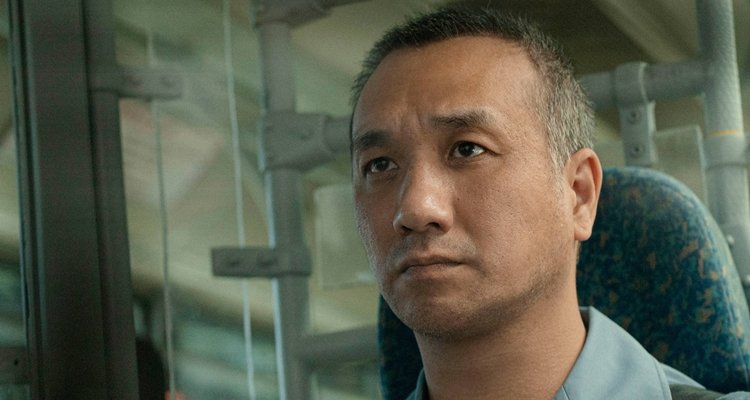
There are too many time-loop stories. One is “Reset” (2022), a television series set in the People’s Republic of China. (Not to be confused with the 2025 “Reset” series set in Thailand.)
In time-loop tales, a person or a few persons must consciously relive a certain period of time, maybe a day, maybe a lifetime, while everyone else in the world has no idea (or perhaps only a vague dreamlike idea) that they are part of this eternal recurrence. Loopers can make new choices during each new iteration of the loop. Everybody else can make only the same choices that they made in the first iteration of the loop unless and until introduced to new possibilities as a result of a looper’s new choices. The conceit both proves and disproves free will.
Why loops happen
A protagonist who realizes that he is caught in a time loop often has a pretty good theory of why this is happening. He can’t know for sure, of course. But whatever causes time loops tries to let only people who are pretty intuitive become aware of the loop, people who realize or who come to realize that Something Is Wrong That Must Be Set Right. These people also realize that the loop will end as soon as an adequate repair is effected. Loops are always caused by either a busted time machine or Providence.
In the case of “Reset,” the problem that needs fixing is not the fact that the People’s Republic of China is a totalitarian dictatorship but a bomb on a bus. Other stories dramatize what life is like under dictatorship; in a story like “Reset” the realities are glossed over. But even fantasies that seem to have nothing to do with such realities may give a few hints.
One of the bus passengers is a man who had been living in a garage and who has just been forced out because living in garages is illegal and inspectors are (for a story-related reason) suddenly making a big effort to inspect garages in the area. The tenant doesn’t want to move, and the landlord doesn’t want to evict him but doesn’t want to get into trouble. The scenario would be just as plausible in Queens or Santa Monica as in the town of Jialin. How extensively residency is regulated in the People’s Republic and how often homes and lives may be destroyed is not shown. But it is hinted at.
In another episode, a trucker who applies for the job of bus driver in Jialin is told that the “welfare” attached to the job can’t compare with that of his former job driving for a state trucking firm. Again, we get a hint, only a hint, this time of the extent to which the state controls employment and firms.
In another episode, we learn how a university shut down a vicious online discussion about the victim of a traffic accident, an accident that the bad guys will use to rationalize bombing or trying to bomb a bus five years later. Any organization anywhere might shut down a discussion sponsored by itself that has degenerated into cyberbullying. But here we also have an intimation of the universal government censorship that in the cyber realm takes the form of the Great Firewall.
The law
In the dénouement of the series, we are treated to documentary-style blocks of text about how the bad guys have been duly punished “according to the law of the People’s Republic of China” and “according to the criminal code of the People’s Republic of China,” a nation where, we are to believe, justice and the rule of law tend always to prevail. So in addition to all the half-honest whispers about the nature of governance in the land in which it takes place, the series offers in conclusion a slab of CCP-style propaganda.
“Reset” is a fantasy, thriller, mystery, understated romance, and cover-up. You may wonder if it is any good as entertainment. It is.