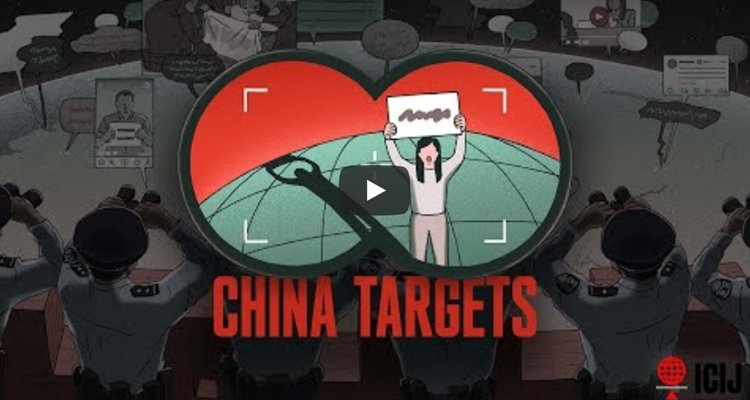
The example bookending ICIJ’s report is Guo Jian, seemingly part of a team of pro-democracy advocates who in 2017 traveled to India to meet with Tibetan leaders in exile (“China uses dissidents-turned-spies to infiltrate overseas activist groups, as authorities flounder,” International Consortium of Investigative Journalists, June 23, 2025).
Suspicious behavior
Guo’s colleagues became suspicious when he started ignoring the precautions that overseas Chinese dissidents take in order to protect themselves from the long arm of the Chinese Communist Party.
They often use nicknames, don’t share private information with strangers, and communicate only through secure, encrypted channels.
Guo began to break these unspoken rules. He became unusually deferential toward some of the activists in his circle, insisting on visiting them at their private residences, Tienchi Martin-Liao, a human rights advocate from Taiwan, told the International Consortium of Investigative Journalists….
Despite uncertainties about Guo’s motives, the members of the group appointed him secretary general….
“We wanted him to belong to the core [of the organization] but, after a certain time, we noticed that his behavior was not quite right,” Martin-Liao said….
In 2023, when Guo tried to persuade younger activists to help him organize pro-democracy events, he insisted on knowing their real names, increasing their suspicions about him, sources familiar with the events told ICIJ.
Finally, in 2024, German authorities arrested Guo, saying that he had been a spy for the Chinese government since 2002.
One of the lessons here is that if a guy in your group starts acting like a spy, maybe he is a spy. And you should try to figure it out and then do something about it. Without meanwhile promoting him.
A Canada-based Chinese activist who met Guo at conferences says that he worried about the possibility that he was a spy because “when you do preparations for a conference you have everyone’s information. He was very careful, very quiet, very alert. During conferences he stayed on the side, looking at people.”
Martin-Liao, who worked with Guo in conferences, says, “We know that some people are really suspicious” and could be working for the Chinese government. “But we are just normal people, we are not police or security [officers].”
A vulnerable position
The cost of too little vigilance by pro-democracy activists or government investigators or both may be great. ICIJ observes that several governments, including the U.S. government, “have investigated dozens of suspects allegedly involved in Chinese covert operations targeting dissidents in recent years. In some cases authorities found that the targets of espionage later ended up in prison or had family members threatened.”
Sometimes victims become spies because they are being extorted by the Chinese Communist Party, which threatens their family or uses some other kind of leverage. “Work for us or we’ll destroy you,” the CCP credibly says.
“It’s just now” that law enforcement in western countries are starting to pay attention to the problem, says Nicholas Eftimiades, a former U.S. intelligence officer and the author of the book Chinese Espionage: Operations and Tactics.
“If someone comes and says: ‘Hey, I’m being threatened or, you know, so-and-so is working for the Chinese state,’ there’s no guarantee that the government is going to do anything. And that leaves that person in a very vulnerable position.”
Also see:
ICIJ: Video: “China Targets: Beijing’s strategy to crush dissent around the globe”