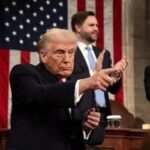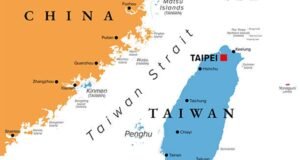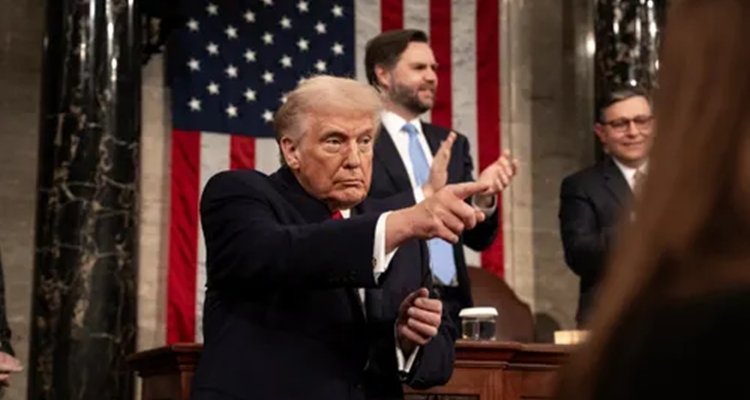
On February 27, 2026, one day before the beginning of the attack on Iran by the United States and Israel, a writer for The Diplomat asked why President Trump didn’t talk about China in his lengthy State of the Union address, delivered on February 24.
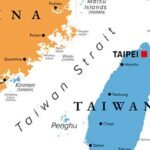
Some argue that even a president as unpredictable as Trump understands that publicly attacking China right now would be ill-timed if he hopes to secure trade deals during his April visit. However, Trump sharply criticized China in his 2018, 2019, and 2020 State of the Union addresses—even when meetings or calls with Xi were imminent. Why, then, the silence this time?
The answer lies in domestic politics. Throughout his second term, Trump has embraced an expansive view of presidential power, treating tariffs as a flexible instrument of leverage in negotiations with Beijing. But the Supreme Court’s recent rebuke of his use of global tariffs under the International Emergency Economic Powers Act has destabilized that strategy…effectively weakening one of Washington’s most potent tools of economic leverage over Beijing….
Following the Supreme Court setback, Trump is in urgent need of a tangible economic victory he can present to Republican voters, especially those dissatisfied with current conditions. That urgency was evident in his State of the Union address, where he repeatedly declared that the United States is “winning so much.” His decision to omit direct criticism of China was a strategic calculation: preserving room for a potential trade deal that could calm internal party divisions and bolster Republican momentum heading into the midterms.
It’s a theory. Perhaps Trump did have such domestic considerations in mind. Perhaps he even hopes to appeal to non-Republican voters.
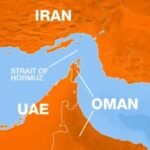
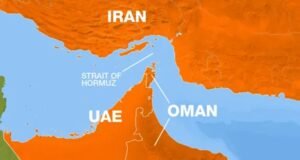
In his address, the president had more to say about Iran, even though he was careful to keep the imminence of Operation Epic Fury a secret. “My preference is to solve this problem through diplomacy. But one thing is certain: I will never allow the world’s number one sponsor of terror, which they [the rulers of Iran] are by far, to have a nuclear weapon. Can’t let that happen.”
Trump did allude to China in his speech, though—in relation to China-assisted protection of dictators. Did he mean to make a point that applied to at least one other country in addition to Venezuela?
Recounting the January raid to capture Venezuelan dictator Nicolás Maduro, the president said that Maduro was to be found in a “heavily protected military fortress. This was a major military installation, protected by thousands of soldiers and guarded by Russian and Chinese military technology. How did that work out? Not too good.”
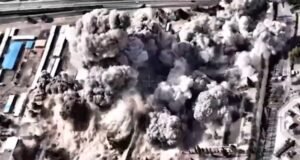
Four days later, China-provided resources would also prove to be of little help in protecting the ayatollah et al. in Iran.