A food-supply crunch is coming courtesy of Iran, Russia, and China, argues Shanaka Anslem Perera (March 24, 2026). “The food the world eats next year is now being decided by molecules that cannot reach the soil in time.”
Iran: For a fee, the Iranians have been letting some oil tankers through the Strait of Hormuz (of countries not on the U.S.-Israeli side of the war). But they are not letting any fertilizer vessels through.
Russia: “The world’s largest exporter of ammonium nitrate just halted all [ammonium nitrate] exports until after April 21. Three to four million tonnes per year, gone from global markets at the exact moment the Northern Hemisphere needs it most.”
China: “Beijing has banned exports of nitrogen-potassium blends and phosphate fertilisers through August 2026.”
Truncated supply of fertilizer makes it harder to grow food in the countries that don’t already have lots of fertilizer. But the U.S. administration is aware of the problem, which may not be as dire as Perera’s hectic direct-marketing style of presentation suggests.
Reuters (March 17, 2026):
The Trump administration is seeking other sources of fertilizer amid the ongoing Iran war’s shipping constraints, including from Venezuela and possibly Morocco, White House economic adviser Kevin Hassett said on Tuesday.
“We’ve…established licenses for Venezuela to produce more fertilizer. We’ve had discussions with Morocco,” he said…. “I’m not saying that we can eliminate what disruption there is so far, but we can minimize it.”…
Fertilizer supplies have shrunk as the U.S.-Israeli war against Iran cut off critical nitrogen fertilizer supplies from the Gulf to the world’s farmers, sending prices spiking by more than one-third in recent weeks.
A couple of days later, Reuters noted how China was restricting fertilizer exports, “further crimping war-tightened supply.”
“China is clamping down on fertiliser exports to protect its domestic market, a number of industry sources said, putting an additional strain on global markets that were already grappling with shortages caused by the U.S.-Israeli war on Iran…. In mid-March, Beijing banned exports of nitrogen-potassium fertiliser blends and certain phosphate varieties, sources told Reuters. The ban, which has not been formally unveiled, was reported earlier this week by Bloomberg News….
“Last year, China sent Brazil, Indonesia and Thailand roughly a fifth of their fertiliser imports and that figure stood at a third for Malaysia and New Zealand, according to International Trade Centre data. For India, it was around 16%, according to its trade data. Between half and 80% of those exports are now restricted, according to a Reuters analysis of Chinese customs data.”
Also see:
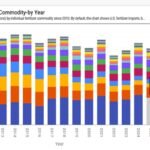
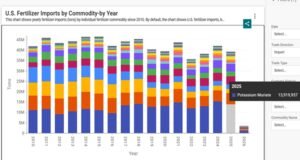
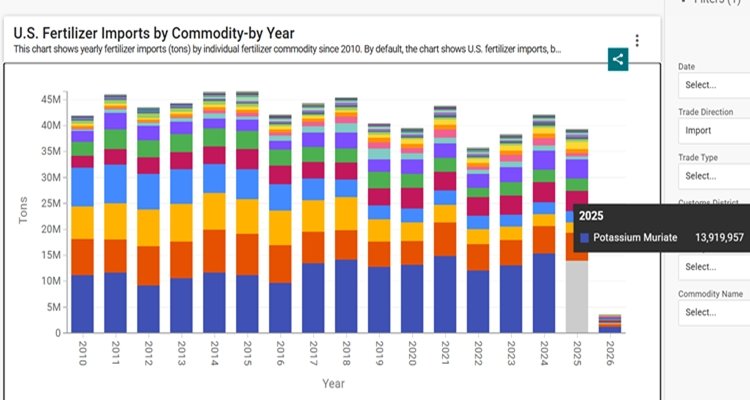
USDA: U.S. Fertilizer Imports by Commodity-by Year
FoodIngredientsFirst: “Iran’s Hormuz blockade leaves fertilizer stranded…”
AInvest: China’s Fertilizer Export Ban Sparks Global Supply Squeeze and Price Surge Risks