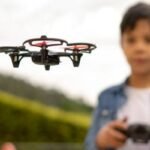
The Chinese government has been fast and furiously flinging regulations at the use of drones by individuals and businesses, to the extent that once-ordinary flights are becoming difficult or impossible, especially in Beijing. (This last perhaps in part because Beijing resident Xi Jinping is nervous about factions in the military?)
Government surveillance of drone use is also being expanded (The New York Times, April 5, 2026).
New regulations are sharply tightening rules for recreational and civilian operators. Since January, officials have ramped up the penalties for unauthorized flying of drones to include possible jail time. Starting in May, all drones must be registered with the owners’ real names, requiring operators to link their flight equipment to their official identification or cellphone number.
Permits will be required at least a day in advance in restricted zones, which cover most cities. The rules make an exception for small drones flying below 400 feet in some open areas, but those areas are very limited.
Flight data will also be transmitted to the government in real time.
Last week, the city government in Beijing went a step further, adopting a near-total ban on drones within the capital’s limits. Under the rules, also set to go into effect in May, drones or their key components may not be sold, rented or brought into Beijing. People entering the city from other provinces will have their bags inspected….
China has required drones to be registered and limited to certain areas since 2024. But as the crackdown has escalated in recent months, many drone users say overzealous enforcement has grounded most flights, even for what they believe are legitimate uses. Chinese social media platforms are filled with accounts of users being questioned, fined, detained and having their drones confiscated by the police across the country….
A 35-year-old drone enthusiast based in northeastern China said he had invested about $2,000 in his DJI drone and related equipment, hoping to start a photography business. But after more than two dozen flight applications were rejected, he abandoned the plan.
A military commentator in China named Song Zhongping, clearly no foe of the government, suggests that it has at least one big practical reason to relax the restrictions: making sure it has plenty of expert drone operators to pick from in a future military conflict.
“If ordinary people can use drones and practice using them in peacetime, that will greatly help in selecting more skilled drone operators during critical moments.”
Critical moments like attacks on Taiwan or the Philippines?
If Song were right about the importance to China of scrounging up capable drone operators, one might be tempted to be ambivalent about whether it’s bad to deprive the Chinese people of the ability to use their drones in even obviously harmless ways. When the CCP is in the middle of shooting itself in the foot, why not let it?
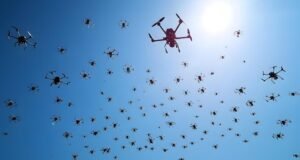
But the People’s Liberation Army has maybe two million active personnel and another half-million reservists. It recognizes the importance of drones in modern warfare, as demonstrated for example by the conflict in Ukraine. Through its training programs, it is doubtless learning which men are especially skilled at operating drones. And swarms of drones.
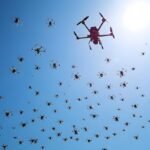
Not that many men are needed to operate a lot of drones. The PLA claims that its tests of AI-guided drone swarms show that one man can operate more than two hundred drones, double the man-to-drone ratio that the Pentagon reportedly demonstrated several years ago. No matter how light or onerous the regulations, the man on the street will not be developing his AI-enhanced ability to command one or two hundred drones at a time.