Expecting to get more of the runaround from France about French involvement in China’s aerospace industry, John Moolenaar is apparently not bothering to submit an inquiry to the French government before formally advising the Secretary of War of Safran’s activities (March 20, 2026).
Moolenaar, chair of the House Select Committee on the Chinese Communist Party, had first looked into what Airbus is up to in China. He’d like the Department of War to prevent U.S. military contractors from helping to arm the People’s Republic of China, the top enemy of the United States.
From Moolenaar’s letter to Pete Hegseth:
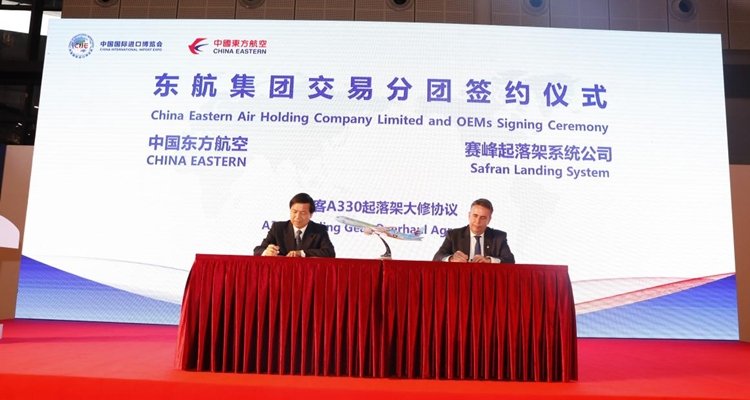
As detailed in my December 19, 2025, letter, the French government is effectively blocking the ability of the Select Committee on China to obtain basic information about French aerospace companies’ activities in China…. The Committee has [also] identified publicly available information showing that Safran, another French aerospace company operating in the American defense ecosystem, is potentially engaging in activities in China. As the French government blocked us from learning more about Airbus’ activities, we expect the same treatment for Safran. Therefore, the Select Committee wanted to inform you of Safran’s Chinese operations.
Safran plays an important role in the U.S. defense industrial base….
The U.S. government should have policies in place to ensure that its contractors are not directly or indirectly advancing China’s military-civilian fusion capabilities in the aerospace industry….
Advanced commercial technologies—such as integrated flight management systems, engines, modular avionics architectures, cockpit displays, and weather radar—can be easily repurposed for military use. Relationships between Western aerospace companies and the Chinese industrial base have not only transferred technology but also taught PRC firms the critical design, manufacturing, and certification know-how needed to develop China’s indigenous aircraft….
While Safran’s ventures in China are commercial in nature, its work…directly supports entities that help advance the CCP’s military capabilities.
Safran itself is not particularly coy about its work in China. The firm’s website “states its ongoing commitment to the development of the Chinese aviation industry through its training programs for engineers and mechanics.” So Moolenaar might have said that his Committee found info “showing that Safran…is engaging in activities in China” rather than “is potentially engaging in activities in China” (emphasis added). There is no need to hedge about the fact of the activities as such, even if not all details of Safran’s work in China are known.
China and the UN
The Select Committee on the CCP seems as industrious under its current chairman as under his predecessor. The seven-page letter to Hegseth—more than two of the pages consisting of footnotes—is dated March 19, 2026. A day later the Committee issued its press release about that letter and another press release announcing a report on how China is conquering the UN: “Inside China’s Strategy to Reshape the United Nations.”
Seems the CCP is making the UN even worse than it already was. The Party’s growing influence “stems from an increase of both monetary contributions and Chinese nationals working as UN personnel. China is not simply participating in or driving initiatives at the UN; it is [shaping] the UN to serve the ends of the Chinese Communist Party.”
Also see:
Select Committee on the CCP: “March 19, 2026 Letter to Secretary of War on Safran’s Activities in China”
Select Committee on the CCP: “Inside China’s Strategy to Reshape the United Nations”