PLA officers don’t succumb to special temptations. It’s just the way things are done. So attests “Sam, a former People’s Armed Police soldier who served at the Ili garrison in China’s far-western Xinjiang region from 1998 to 2001” (Vision Times, April 10, 2026).
Informed by Sam’s account, Vision Times concludes that the Chinese military is “an institution built for plunder rather than combat, where every promotion, every posting, and every holiday ritual serves the same function, moving money upward.” There are also other forms of corruption, like sexual or physical abuse of soldiers. If Xi wants to find and punish corruption, he can do so anytime. But perhaps if he were consistent about it, nobody would be left to command anybody.
Recruitment and promotion
Families who want their sons to serve pay fees to the recruiting officer. The officer passes a share up the chain of command. The money flows upward through platoon commander, company commander, battalion commander, regimental commander, and finally to division commander, each level skimming its cut before passing the remainder along….
The same structure governs officer promotions. Sam described a promotion quota of 100 slots, of which 90 are quietly reserved for the children of senior officers. The remaining ten are available for purchase by recruits from ordinary families. The going rate for a company commander’s post, which once cost a few thousand yuan, has risen to 100,000 or 200,000 yuan. Every step up the ladder requires a payment….
The bribery does not stop with promotions. Holiday gift-giving has become an institutionalized tribute.
Abuse of women
Female soldiers are stationed at division headquarters rather than in frontline units. Sam said he knew one female soldier personally, and that she described advancement in the military in terms that made the implicit arrangement explicit: it meant accompanying officers to drinking sessions when commanders visited the base, and sexual compliance with those commanders.
Abuse of men
“The most common experience of male soldiers in the military is being beaten,” [Sam] said. Many of his fellow soldiers developed symptoms consistent with post-traumatic stress disorder. Some experienced dissociative episodes. Others were beaten severely enough to suffer lasting psychiatric damage…. The abuse goes unreported because reporting conditions within the military to anyone outside the chain of command constitutes leaking state secrets, a charge that can result in imprisonment or worse.
Mediocre commanders
China’s military presents itself to the world as a modern force preparing for high-intensity warfare. Sam’s account of its internal structure suggests otherwise.
When he served, the regimental commander, deputy regimental commander, and deputy division commander at his unit were all children of senior Party or military officials, a class of political heirs sometimes called “princelings.” The actual work, and the actual physical danger, fell to soldiers from ordinary families, because the safe assignments and the privileges flowed to the politically connected. The princelings did not rise through demonstrated competence or battlefield performance. Their positions came through family connections. “They all suddenly parachuted into command positions when they grew up,” Sam said. “They simply cannot fight a war.”
Mediocre weapons
Sam described a missile research institute in his home city of Luoyang, in central China, and the military factories attached to it. Contracting worked through a shell arrangement: a 500,000-yuan contract would be handed to a subcontractor, who would skim half for himself and pass the remainder further down the chain. The actual production, at the end of the process, was carried out by migrant workers with no specialized training in weapons manufacturing.
“The military-industrial subcontracting system in China is the same as the infrastructure system,” Sam said. “It’s shoddy construction all the way through.”
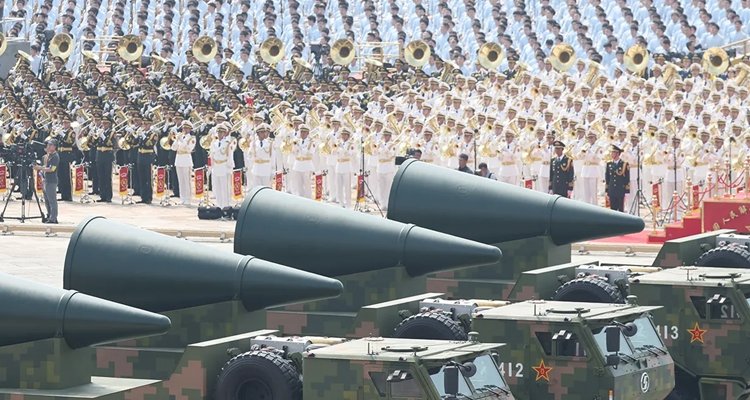
Exactly how widespread are these forms of corruption cannot be estimated on the basis of one man’s insider account. But many of his observations have been backed by other reporting. We have heard a lot about bribes and deficiently produced weapons. What does it all add up to? Perhaps that the People’s Liberation Army is not as prepared to fight a war as CCP bluster suggests. It’s easier to look great in a parade than to win battles.