The Hong Kong Free Press publishes a series on the latest developments in “Hong Kong’s national security crackdown,” and we’re in “month 69” (April 7, 2026).
We’ve already mentioned a new regulation announced in March that lets the Hong Kong authorities fine you and throw you in jail if they request access to your smartphone and you refuse.
“Failure to do so can be punished by up to one year behind bars and a HK$100,000 fine. Providing a false or misleading statement is punishable by up to three years’ imprisonment and a fine of HK$500,000.”
Another big item in the Free Press’s update is the arrest of a bookseller and his employees for offering “seditious” books.
In late March, Hong Kong independent bookseller Pong Yat-ming and three of his staff members were reportedly arrested on suspicion of selling seditious titles, including a biography of jailed media tycoon Jimmy Lai.
Local media reported on March 24 that national security police arrested one man and three women for allegedly “knowingly selling a publication that has a seditious intention,” an offence under Hong Kong’s homegrown security law, the Safeguarding National Security Ordinance, known locally as Article 23.
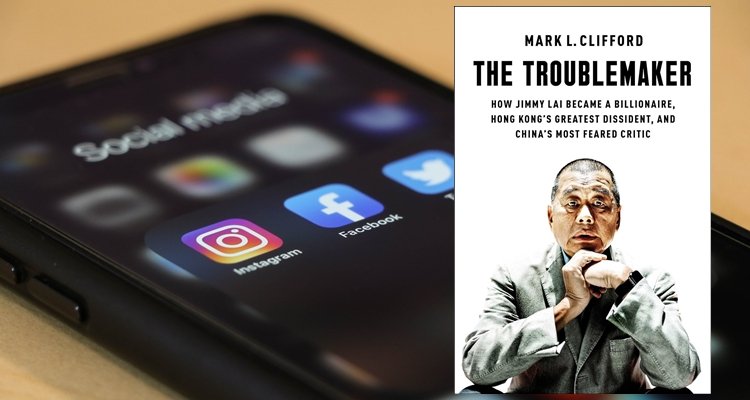
Citing anonymous sources, the reports said police also raided Book Punch—Pong’s Sham Shui Po bookstore—and seized allegedly seditious publications, including Lai’s 2024 biography, The Troublemaker: How Jimmy Lai Became a Billionaire, Hong Kong’s Greatest Dissident, and China’s Most Feared Critic.
The bookstore owner and the employees were released on bail on March 25, Book Punch said on Facebook. Pong confirmed with HKFP that he and his staff had been released on bail, but he could not say anything about the case.
Also noted in the roundup: the dissolution of Hong Kong’s largest teachers’ union and the ongoing “national security” trial of former leaders of the Hong Kong Alliance in Support of Patriotic Democratic Movements of China. The CCP probably regards the name alone as proof enough of sedition. But the focus of the case is the Alliance’s call for “an end to one-party rule.”
One of the defendants, Lee Cheuk-yan, disputed that this slogan implies a demand to overthrow the Chinese Communist Party. “Based on my love for the people, I hoped the Communist Party would reform, to let people have the rights and happiness they deserve.” This is not a line of defense with which the CCP or its lackeys in robes will be sympathetic.
Apropos: “At one point, the judge reprimanded [Chow Hang-tung, a lawyer who is representing herself] when she referred to the crackdown [in Tiananmen Square] as the ‘June 4 massacre.’ ‘If you use phrases like this, I will need to consider whether to allow you to continue asking questions,’ he said, correcting the term to ‘June 4 incident.’ ”