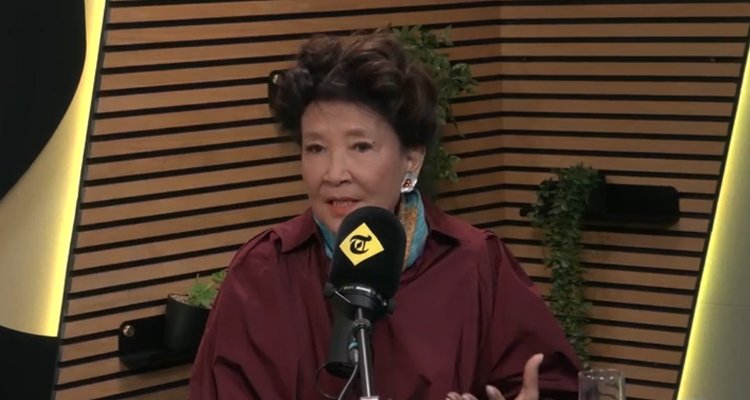
“It is with the Western apologists’ helping hand that Xi has dragged China back on to the road towards a Maoist hell—even if it is unlikely he will get there.”
The speaker is Jung Chang, author of Fly, Wild Swans. The point is that throwing money at a communist-fascist dictatorship determined to preserve its basic nature will not alone convert it into a freedom-protecting democracy and in fact expands its means of doing evil (The Telegraph, February 8, 2026).
China may have risen from being a decrepit, isolated state to a global superpower since Chang wrote Wild Swans [published in 1991], her bestselling exposé of the Cultural Revolution, but the era of President Xi evokes disturbing parallels with Mao Zedong’s murderous rule.
Chang’s clear-eyed assessment makes a mockery of the so-called “golden relationship” between China and countries like the UK along with international efforts to suck up to a nation that combines a $20tn (£15tn) GDP with an appalling human rights record….
Speaking just days after the Prime Minister’s return from Beijing, the 73-year-old—who fled China for London in 1978—is unable to hide her disdain for the visit. “What makes me feel both sad and angry is watching Britain’s Prime Minister go to Beijing and be openly humiliated. The Chinese authorities went out of their way to do it.
“Instead of being received by Xi Jinping himself, he was sent around the Forbidden City by a tour guide. That is not accidental.
“When Donald Trump visited Beijing, Xi personally accompanied him through the Forbidden City. When Emmanuel Macron visited recently, crowds were carefully organised to welcome him, to flatter him, to make him feel admired. With Britain, the opposite message was sent.”
Nor is Chang wishy-washy about the threats to the United Kingdom posed by the Chinese Communist Party. When asked about the mega embassy/spy base/torture chamber that the Starmer government has just given the CCP formal permission to build in London, she says: “Anything that poses even a remote risk to Britain’s national security should not be permitted.”
Mao
Jung Chang is also the author, with Jon Halliday, of Mao: The Unknown Story.
What seemed to be widely unknown at the time of its publication in 2011 (and may still be) is what a sadistic butcher Mao always was, from the very beginning—even before he took up Stalinist-style Communism as the best means of achieving his ambitions. In a chapter about the years 1925 to 1927, when Mao was in his early thirties, the authors write that after giving a “moderate” political address in Changsha, “he went off on an inspection tour of the Hunan countryside.”
By the end of the tour, which lasted thirty-two days, he had undergone a dramatic change. Mao himself was to say that before this trip he had been taking a moderate line, and “not until I stayed in Hunan for over thirty days did I completely change my attitude.” What really happened was that Mao discovered in himself a love for bloodthirsty thuggery. This gut enjoyment, which verged on sadism, meshed with, but preceded, his affinity for Leninist violence. Mao did not come to violence via theory. The propensity sprang from his character, and was to have a profound impact on his future methods of rule….
Mao saw and heard much about brutality, and he liked it. In the report he wrote afterwards, in March 1927, he said he felt “a kind of ecstasy never experienced before.” His descriptions of the brutality oozed excitement, and flowed with an adrenalin rush. “It is wonderful! It is wonderful!” he exulted.
One phrase is a great puzzle in this book. What on earth can “sadism” mean if the love of bloodthirsty thuggery that Mao discovered in himself, amply detailed in the many pages that follow, only “verged on” sadism?
Mao Tse-tung was always willing to torture and slaughter members of any group en masse, including other Communists, if by doing so he felt he could further some purpose. He did not torture and kill as a kind of reluctant duty that revolted his sensibilities. He enjoyed it, and he regarded the lives of others as infinitely dispensable. Indifference to human life is not unknown among contemporary CCP officials either. For example, it is they who sanction and are among the beneficiaries of the murderous practice of forced organ harvesting.